This content is for informational purposes only and does not substitute professional medical advice. Always consult a physician for diagnosis and treatment.
The healthcare landscape in the United States has reached a pivotal turning point in 2026. The traditional model of sitting in a sterile, crowded waiting room for hours is rapidly being replaced by more patient-centric alternatives. Today, when you search for urgent care near me, the results are just as likely to include a digital link as they are a physical address. The choice between booking a telehealth doctor appointment and requesting a physical doctor at home has become a fundamental decision for modern families.
This evolution is driven by a simple necessity: accessibility. Whether you are navigating the busy streets of New York or the suburban sprawl of Houston, getting medical attention within your specific ZIP code now involves weighing the speed of technology against the depth of a physical examination. According to recent insights from the PubMed Central (PMC), the integration of remote monitoring and virtual consultations has significantly reduced the burden on traditional emergency departments.
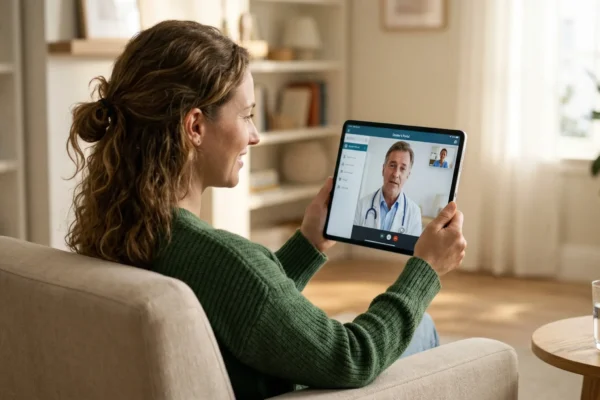
The Digital Front Door: When to Choose a Virtual Doctor Visit
When symptoms are straightforward, such as a mild sore throat, seasonal allergies, or a request for a medication refill like Lisinopril for blood pressure, a screen-to-screen consultation is often all that is required. Physicians can visually inspect the patient, discuss medical history, and provide a treatment plan in a fraction of the time it takes to commute to a clinic. This is where services like Doctor2me provide significant value, offering a seamless way to connect with professionals without the logistical nightmare of city traffic or the risk of exposure to other illnesses in a public facility.
Practical Scenarios for a Televisit
- Dermatological Concerns: Showing a new rash or mole to a specialist via a high-definition camera.
- Behavioral Health: Routine therapy sessions or psychiatric follow-ups that do not require physical contact.
- Minor Infections: Discussing symptoms of a suspected urinary tract infection to receive a prescription for Nitrofurantoin.
- Follow-up Care: Reviewing recent lab results with a primary care provider to adjust a treatment plan.
The American Academy of Family Physicians (AAFP) notes that virtual visits are most effective when a physical manipulation of the body is not required for a definitive diagnosis.
The Diagnostic Depth of a Housecall Doctor
When you search for a doctor’s home visit near me, you are seeking the comprehensive “human touch” that defined medicine for generations, now enhanced by 2026 technology. A physical visit allows for a “whole-person” assessment that includes observing the patient’s living environment. This can be crucial for identifying environmental triggers for asthma or checking the safety of a home for an elderly patient prone to falls.
In this context, specialized providers like Allen Jahroumi, M.D. represent the gold standard of modern house calls, bringing clinical expertise and diagnostic tools directly to the patient’s bedside to ensure no detail is overlooked during the examination. This level of personalized attention is supported by research from the National Institutes of Health (NIH), which suggests that home-based care leads to higher patient satisfaction and better adherence to treatment protocols.
When a Physical Presence is Mandatory
- Acute Pain: Severe back pain or abdominal distress that makes movement difficult.
- Respiratory Distress: When a physician needs to physically listen to lung sounds to rule out pneumonia.
- Complex Wound Care: Stitches, dressing changes, or evaluating a post-surgical site for infection.
- Pediatric Fevers: Where a physical exam is necessary to check ears, throat, and lymph nodes in a fussy child.
Comparing Your In-Home Care Options
| Feature | Telehealth Doctor Appointment | Housecall Doctor (In-Person) |
| Immediate Availability | High – usually within 30-60 minutes | Moderate – typically same-day or next-day |
| Diagnostic Capability | Visual and auditory only | Full physical exam (palpation, vitals) |
| On-Site Testing | None (requires a separate lab visit) | Rapid flu, strep, EKG, and blood draws |
| Treatment for Acute Injury | Triage and advice only | Can perform minor procedures (e.g., stitches) |
| Prescription Capability | Full (excluding certain controlled substances) | Full (often includes starter doses) |
| Patient Comfort | Maximum – stays in bed | High – remains in a familiar environment |
Navigating Urgent Care Near Me: The ZIP Code Factor
Doctor2me addresses this gap by bridging the distance between the provider and the patient’s home. By utilizing a hybrid model, patients can often start with a digital consultation to determine the severity of their condition. If the situation requires more than a screen, a physical visit can be coordinated. This “triage-first” approach ensures that resources are used efficiently and that patients who truly need a physical exam receive one without unnecessary delays.This tiered approach is the most sustainable way to manage population health in the digital age.
Scannable Checklist: Preparing for Your At-Home Appointment
For a Telehealth Doctor Appointment:
- Check Your Tech: Ensure your device is charged and your internet connection is stable.
- Lighting Matters: Set yourself up in a well-lit room so the doctor can see your skin tone and any visible symptoms clearly.
- List Your Meds: Have all your current medications, such as Metformin or Atorvastatin, ready to show the camera.
- Quiet Space: Find a private area where you can discuss sensitive health information without interruptions.
For a Doctor Home Visit Near Me:
- Clear a Workspace: Provide a clean, well-lit area where the doctor can set up their medical bag and perform the exam.
- Contain Pets: For the safety of the medical staff, ensure dogs or cats are in another room during the visit.
- ID and History: Have your photo ID and a printed list of your medical history and allergies ready.
- Comfort First: Ensure the patient is in a position where they can be easily examined (e.g., in a sturdy chair or a bed with clear access).
The Role of Specialty Care in the Home
By utilizing a housecall doctor, these patients can receive hospital-level monitoring in the comfort of their own homes. Modern portable diagnostic kits allow for real-time blood analysis and cardiac monitoring that previously required a specialized clinic. The Mayo Clinic notes that home-based care services are essential for preventing the “revolving door” effect of hospital readmissions among the elderly.
Safety and Quality Standards in 2026
Furthermore, providers who visit homes are equipped with the same sterile, single-use medical supplies found in top-tier hospitals. The goal is to bring the “clinical environment” to the patient, rather than forcing the patient into a “clinical building.” This shift is particularly vital for immunocompromised patients who face genuine risks when entering a public waiting room filled with contagious individuals.
The Integration of Pharmacy and Home Care
This integration is a cornerstone of the Doctor2me philosophy – reducing the number of steps between a patient feeling ill and a patient starting their recovery. By removing the need to drive to a clinic and then drive to a pharmacy, the patient can focus entirely on rest and healing.
The choice between telehealth and a house call is not a competition; it is a clinical spectrum. A televisit offers the speed and convenience needed for minor ailments and routine follow-ups, while a housecall doctor provides the diagnostic depth and physical intervention required for more serious or complex conditions.
As we move further into 2026, the ability to receive expert care in your own ZIP code is no longer a luxury – it is a standard of modern living. By understanding the strengths of each model, you can ensure that when you search for urgent care near me, you are choosing the path that leads to the fastest and most effective recovery. Whether it is through a digital screen or a knock at the door, high-quality medical care is finally meeting patients exactly where they are.
Frequently Asked Questions
What is the main difference between a telehealth doctor appointment and a medical house call?
A telehealth doctor appointment is a virtual consultation conducted via secure video, while a house call involves a physician physically visiting your home. Virtual visits are best for rapid triage and minor issues, whereas house calls allow for a comprehensive physical exam and on-site diagnostic testing.
Can a physician prescribe medications like Amoxicillin during a virtual doctor visit?
Yes, if the doctor determines it is clinically appropriate, they can send an electronic prescription for antibiotics like Amoxicillin or maintenance drugs like Lisinopril directly to your pharmacy. This allows you to start your recovery immediately without leaving your home after a successful televisit.
Is it possible to get urgent care near me without visiting a traditional clinic?
Absolutely. By using services like Doctor2me, you can access either a virtual doctor visit or a housecall doctor directly in your ZIP code. This hybrid model provides a convenient alternative to crowded waiting rooms, offering high-quality medical attention in the comfort of your own living room.
What are the clinical benefits of choosing a doctor home visit near me?
A physical house call allows a provider to perform essential diagnostic tasks, such as listening to lung sounds or checking vital signs, which are impossible during a remote visit. This “eyes-on” approach is particularly valuable for elderly patients or those with acute pain who require a more thorough examination.
Are virtual doctor visits secure and private?
Modern telehealth platforms use HIPAA-compliant, encrypted technology to protect your personal health information during every session. This ensures that your televisit is just as private and secure as a face-to-face consultation in a standard medical office.
What should I have ready for a doctor at home or a televisit?
Prepare a list of your current symptoms and any medications you are taking, such as Metformin or Atorvastatin. For a home visit, ensure there is a well-lit, quiet area for the exam, and for a virtual appointment, check that your device has a stable internet connection.
Sources Used
- PubMed Central(PMC) –Breaking the Emergency Room Cycle: The Impact of Telemedicine on Emergency Department Utilization – PMC
- American Academy of Family Physicians (AAFP) –Operationalizing Virtual Visits During a Public Health Emergency
- National Institutes of Health (NIH) –Telehealth Benefits and Barriers – PMC
- Mayo Clinic –Telehealth: Technology meets health care – Mayo Clinic