This content is for informational purposes only and does not substitute professional medical advice. Always consult a physician for diagnosis and treatment.
You wake up short of breath in the night and have to prop yourself up on extra pillows to breathe. During the day, your socks leave deep marks and your ankles look puffy and swollen. Taken separately, these can seem like minor annoyances. Together, they can be the body’s way of signaling congestive heart failure, a condition in which the heart struggles to keep up with the demands placed on it.
Despite the name, the heart has not stopped working in congestive heart failure. It simply cannot keep up with the body’s needs, so blood and fluid back up and collect where they should not. That backup is behind the swelling and breathlessness that often bring people in.
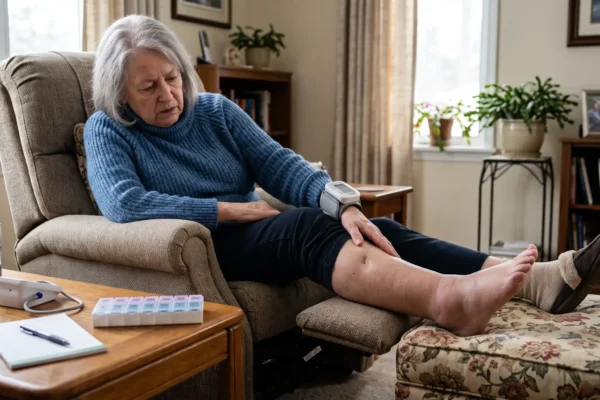
What Congestive Heart Failure Is
When the pump falls behind, blood can back up in the veins and fluid can collect in the lungs, abdomen, and lower body. That backup is where the familiar symptoms, including swelling and breathlessness, come from.
Swollen Ankles and Breathlessness: Why They Happen
Why Heart Failure Causes Swelling
Waking Up Breathless
Other Signs of Congestive Heart Failure
- Shortness of breath with activity or when lying down
- Swelling in the feet, ankles, legs, or abdomen
- Fatigue and weakness that limit everyday activity
- A persistent cough or wheezing, sometimes with pink or white foamy mucus
- Rapid or sudden weight gain from fluid buildup
- A fast or irregular heartbeat
A practical way to track fluid is a daily weight check. Johns Hopkins Medicine describes daily weighing as the easiest way to spot fluid retention, and Mayo Clinic advises calling your clinician if you gain 5 pounds or more within a few days.
The Stages of Congestive Heart Failure
These stages only move in one direction, so the goal of care is to slow progression and keep symptoms under control. Doctors may also use the New York Heart Association classes, from Class I with no limits on activity to Class IV with symptoms even at rest, to describe how much the condition affects daily life.
When to Seek Care
Because keeping up with regular checkups matters so much in heart failure, some people find it easier to arrange a doctor who can visit them at home, which reduces missed appointments and helps catch changes early.
Managing Heart Failure at Home
Regular lab work is part of the picture too, since doctors track kidney function and other markers when adjusting heart medications. For people who cannot easily get to a lab, Sonic Diagnostic Laboratory offers blood draws at home. And getting to cardiology visits should not be a barrier: non-emergency medical transportation from a provider like MediZoom Transportation offers wheelchair-accessible rides to and from appointments. If you are new to this kind of service, this overview of what non-emergency medical transportation involves is a helpful starting point.
What Causes Congestive Heart Failure
Understanding the underlying cause matters because treating it is part of treating the heart failure itself. Controlling blood pressure, managing blood sugar, and addressing artery or valve disease can all help the heart cope better and slow the progression of the condition.
Living With Congestive Heart Failure Day to Day
Tracking the Signs at Home
Medications and Follow-Up
How Congestive Heart Failure Is Diagnosed
Additional tests, such as a chest X-ray to look for fluid or an electrocardiogram to check the heart’s rhythm, help complete the picture. Because these evaluations guide treatment, keeping up with them matters, and regular blood work lets doctors fine-tune medications safely. For anyone managing several appointments at once, arranging labs and rides in advance can take a lot of stress out of the process.
Small Changes That Help You Breathe Easier
Diet plays a powerful role too. Because salt causes the body to hold on to fluid, reading labels and cooking with less added salt can reduce swelling and breathlessness over time. Spacing activity through the day, sitting to rest when needed, and keeping a simple log of symptoms all help you stay ahead of the condition rather than reacting to it. None of these steps replace medical care, but together they can noticeably improve day-to-day comfort.
Frequently Asked Questions
What are the first signs of heart failure?
Often the first sign is shortness of breath after routine activity, along with fatigue and swelling in the feet, ankles, and legs. Waking up breathless at night and sudden weight gain from fluid buildup are also early warning signs worth mentioning to a doctor.
Why does heart failure cause swollen ankles?
When the heart cannot pump forcefully enough, blood returning from the body backs up in the veins. That raised pressure pushes fluid out of the blood vessels into nearby tissue, which causes swelling in the feet, ankles, and legs.
What are the four stages of congestive heart failure?
The stages run from A to D: A is being at risk with no symptoms or structural change, B is a structural change without symptoms, C is current or past symptoms, and D is advanced heart failure that disrupts daily life. The stages only move forward, so treatment aims to slow progression.
Is congestive heart failure the same as a heart attack?
No. A heart attack is a sudden blockage of an artery feeding the heart, while heart failure is a long-term condition in which the heart cannot pump blood efficiently enough for the body’s needs. A heart attack can damage the heart and lead to heart failure, but they are different events.
How long can you live with congestive heart failure?
It varies widely depending on the stage, age, other health conditions, and how well treatment is followed. Heart failure is a serious, long-term condition, but many people manage it for years with medication, monitoring, and lifestyle changes, so individual outlooks differ.
When should you go to the ER with heart failure?
Seek emergency care for chest pain, fainting or severe weakness, or sudden severe shortness of breath with coughing up pink or white foamy mucus. Also call your provider promptly for worsening symptoms or a weight gain of five pounds or more within a few days.