Disclaimer: This article is for general educational purposes only and is not a substitute for professional medical advice, diagnosis, or treatment. Always talk with your doctor or a qualified health provider about your own health.
COVID has not gone away, but it has changed shape. In 2026, the newest variants tend to feel less like the classic loss of taste and smell and more like a nasty cold, often starting with a sore throat sharp enough to make swallowing miserable. That shift is why so many people in Westlake Village and the Conejo Valley are asking whether their scratchy throat is a cold, allergies, or COVID.
This guide breaks down the current COVID symptoms, the two variants driving recent waves, Nimbus and Stratus, and how to use an at-home test the right way. The goal is simple: help you recognize the signs early and know your next step, without the guesswork.
A quick note before diving in: variant names change from season to season, and the virus keeps evolving. What stays steady is the practical playbook of spotting symptoms, testing correctly, and knowing when to reach out for care, which is what this article focuses on.
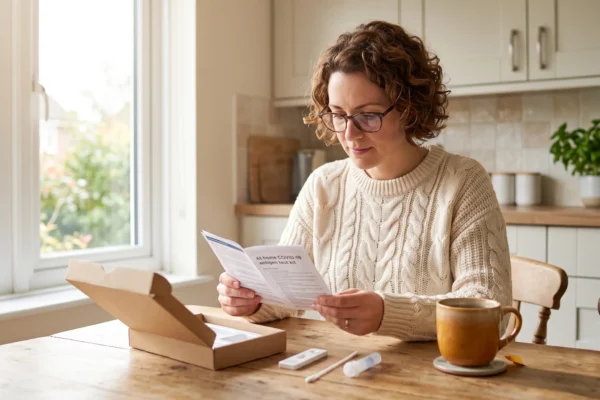
What COVID Symptoms Look Like in 2026
The Most Common Signs Now
- Sore throat
- Fever or chills
- Cough
- Congestion or runny nose
- Fatigue
- Headache and muscle or body aches
- Loss of taste or smell (less common than earlier in the pandemic)
Not everyone gets every symptom, and some people feel almost nothing while still being able to spread the virus. Digestive symptoms such as nausea or diarrhea can show up as well.
One shift worth noting is that the classic loss of taste and smell, so common early in the pandemic, is far less typical now. Today’s cases tend to sit high in the airway, which is why a raw throat and congestion often lead the way instead.
When Symptoms Start
That timing also matters for testing. Testing too early, before the virus has built up, can produce a negative result even when you are infected.
How COVID Spreads
This is why a scratchy throat is easy to pass along before you even realize you are sick, and why staying home at the first strong symptom does so much to protect coworkers, classmates, and family.
Emergency Warning Signs
- Trouble breathing
- Persistent pain or pressure in the chest
- New confusion or trouble staying awake
- Pale, gray, or blue-tinted lips, skin, or nail beds
This list does not cover every emergency, so trust your judgment and seek care for any symptom that feels severe.
The New Variants: Nimbus and Stratus
Nimbus (NB.1.8.1) and the ``Razor Blade Throat``
Nimbus spreads efficiently, with lab studies suggesting it infects cells up to 2.5 times more readily than the previous leading variant. Even so, there is no evidence it causes more severe illness for most people than earlier strains. The other symptoms, fatigue, cough, congestion, fever, and body aches, look familiar.
Nimbus was first detected in China in early 2025 and spread widely from there. Its efficient transmission is a big part of why it fueled a wave of cases before Stratus took over the top spot, and why it has continued to circulate alongside newer variants.
Stratus (XFG) and a Hoarse Voice
A sore throat is again the leading complaint, and some people notice a hoarse or raspy voice along with the usual fever, fatigue, cough, and congestion. Like Nimbus, Stratus has not been linked to more severe disease than other recent variants.
Part of what makes Stratus notable is how it formed. It is a recombinant, meaning it blends genetic material from two earlier Omicron subvariants, which can help a new strain spread more easily. It emerged in Southeast Asia around the start of 2025 and reached the United States by that spring before climbing to the top.
Are These Variants More Dangerous?
``My Throat Is Sore When I Swallow`` – Could It Be COVID?
Why the Sore Throat Stands Out
On its own, though, a sore throat cannot tell you which infection you have. The symptom overlaps with colds, strep throat, allergies, and other viruses, so it points you toward testing rather than a diagnosis.
COVID, a Cold, or Something Else?
- COVID and colds share many symptoms, so overlap is normal
- A sudden, severe sore throat with fever leans more toward COVID or strep
- Only a test can confirm COVID for sure
Allergies can also mimic the early scratchy-throat stage, though they usually come without a fever and tend to bring itchy, watery eyes. Strep throat, on the other hand, often arrives with a fever and swollen glands but without the cough and congestion typical of a virus. These are hints, not proof, which is why a test remains the tiebreaker.
If your symptoms are mild and a test is negative, home care for a common cold in the Thousand Oaks area may be all you need. If you are unsure or feel worse, testing and a conversation with a provider clear things up.
At-Home COVID Testing
Antigen Self-Tests vs Lab Tests
For everyday use, the rapid antigen tests sold at pharmacies and many stores are convenient and quick. Keeping a couple on hand at home means you can check at the first sign of a sore throat rather than scrambling to find one when you already feel unwell.
When and How to Test
- Read the package insert and follow every step closely
- If you have symptoms, testing right away is reasonable, but an early negative may need repeating
- After a known exposure without symptoms, waiting a few days improves accuracy
- Check the test’s expiration date before using it
One Negative Test Is Not Always the End
For someone with symptoms, that means two negative antigen tests taken 48 hours apart; without symptoms, three tests 48 hours apart. A single lab NAAT test can also be used to confirm an antigen result. If symptoms are clearly present but tests keep coming back negative, a provider can help decide whether a lab test is the better next step.
What a Positive Result Means
There is no need to panic over a positive result. For most people it signals a stretch of rest and caution rather than an emergency, and knowing early simply lets you make good choices about work, family, and any treatment that may help.
Who Is at Higher Risk?
- Adults 65 and older
- People with chronic conditions such as heart disease, diabetes, or lung disease
- People with weakened immune systems
- People who are pregnant
If you or someone in your household falls into one of these groups, it is worth having a plan in place before illness strikes. Knowing how to test quickly and how to reach a provider can save precious time, because antiviral treatments tend to work best when started early in the illness.
Taking Care of Yourself and When to Get Help
Home Care Basics
- Rest and plenty of fluids
- Managing fever and aches as directed by a provider or the label
- Soothing a sore throat with warm drinks or lozenges
- Watching for any symptom that worsens instead of improving
Over-the-counter remedies can ease a sore throat, congestion, or fever, but they treat the symptoms rather than the virus itself. Giving your body rest and time is still the core of recovery for a typical case.
Keep in mind that you can be contagious from a couple of days before symptoms start to about 8 to 10 days after, so taking steps to avoid spreading it protects the people around you.
When to Seek Medical Care
For those who feel too unwell to travel or want to avoid a crowded waiting room, it is possible to arrange for a doctor to visit you at home. Knowing where to find in-home urgent care around Agoura Hills ahead of time makes it easier to act quickly when you are not feeling your best.
Prevention and Vaccines
Good ventilation deserves a special mention, since COVID spreads through the air. Opening a window, running a fan, or gathering outdoors when possible all lower the odds of passing it along. None of this needs to be stressful, just a set of simple habits that make a season of respiratory viruses easier to get through.
Frequently Asked Questions
What are the COVID symptoms now?
Current COVID often feels like a bad cold, most commonly a sore throat, fatigue, cough, congestion or runny nose, fever or chills, headache, and body aches. Loss of taste or smell is less common than earlier in the pandemic. Some people have no symptoms at all yet can still spread the virus.
What are the weird symptoms of the new COVID variant?
The most talked-about symptom of recent variants is a very painful sore throat. With Nimbus (NB.1.8.1) people describe a sharp, stabbing ‘razor blade’ throat that hurts to swallow, while the Stratus (XFG) variant is often linked to a hoarse or raspy voice. Otherwise the symptoms resemble a typical cold.
What are the very first signs of COVID?
Early COVID frequently starts with a sore throat, congestion, and fatigue, and symptoms can appear anywhere from 2 to 14 days after exposure. Because it can begin gradually and looks like other respiratory viruses, testing is the reliable way to confirm it. Testing too early, though, can give a false negative.
Are home COVID tests still accurate?
At-home antigen tests remain useful, and a positive result is considered accurate and reliable. They are less sensitive than lab NAAT tests, so a single negative result does not fully rule out COVID, especially early on. Repeating the test improves confidence.
How do you properly do an at-home COVID test?
Read the package insert and follow each step closely, and check the expiration date first. If you have symptoms, guidance is to take two negative antigen tests 48 hours apart; without symptoms, three tests 48 hours apart. A single lab NAAT test can confirm an antigen result.
How long am I contagious with COVID?
You can be contagious from a couple of days before symptoms begin to roughly 8 to 10 days afterward. Taking precautions during that window, such as staying home and avoiding close contact, helps protect others. A provider can advise on your specific situation.