In January 2026, California finds itself grappling with an unprecedented public health crisis. State authorities have officially confirmed the largest outbreak in regional history linked to Amanita phalloides, globally recognized as the death cap mushroom. Current data reports at least 3 fatalities and dozens of hospitalizations; many patients remain in critical condition, awaiting emergency liver transplants. This dire situation has prompted experts to sound the alarm on what makes this fungus the deadliest in the world and why even seasoned foragers are making fatal mistakes.
Understanding the Threat: What is a Death Cap?
For many novice foraging enthusiasts, the question of what is a death cap is a matter of life and death. This fungus belongs to the Amanita genus, but unlike its more recognizable cousins, it lacks bright, “warning” colors. Its primary danger lies in amatoxins—complex protein compounds that are incredibly stable and resistant to heat or cold.
Identifying Death Cap Mushrooms: How to Spot the Danger
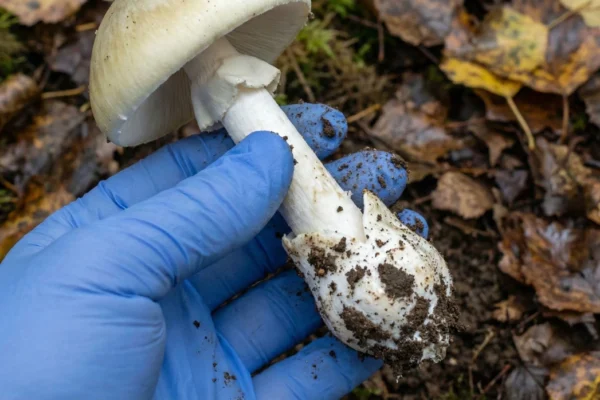
The death cap does not look inherently threatening. It lacks the iconic bright red cap with white spots often associated with poisonous fungi. Instead, its appearance is deceptively “edible” and even appetizing. When examining a typical death cap mushroom image, one can see how easily this species can mimic harmless varieties.
Key death cap mushroom characteristics:
-
The Cap: Typically 5 to 15 cm in diameter, with colors ranging from pale green and olive to yellowish or pure white.
-
The Gills: These always remain white, a key distinction from common store-bought mushrooms or field mushrooms whose gills darken over time.
-
The Stem: Features a soft, skirt-like ring just below the cap.
-
The Volva: At the very base of the stem sits a characteristic cup-like sac, which is often buried underground or hidden beneath fallen leaves.
The process of identifying death cap mushrooms is further complicated because they can be easily mistaken for the “paddy straw” mushroom (Volvariella volvacea) popular in Asian cuisine, or certain species of green russulas.
Habitat and Death Cap Mushroom Location
When considering a typical death cap mushroom location, they are most commonly found in deciduous forests. In California, these fungi form a symbiotic relationship primarily with oak trees. However, mycologists are currently observing an expansion of their range; the “death cap” is increasingly appearing in urban parks, suburban gardens, and coastal woodlands, significantly raising the risk for local residents.
Why is this Fungus So Lethal?
A lethal dose for an adult is as little as half a mushroom cap. Amatoxins are not destroyed by cooking, freezing, or drying. They act selectively by blocking RNA synthesis within cells, leading to rapid cell death. The liver bears the brunt of the damage, followed by total kidney failure. In scientific circles, the death mushroom is rightfully regarded as nature’s most efficient silent killer.
Stages of Poisoning: A Deceptive Progression
Medical professionals highlight a specific, treacherous timeline of symptoms:
-
Latency Period (6–24 hours): The victim feels completely fine while the toxins are already dismantling internal organs.
-
Gastrointestinal Phase: Sudden, violent abdominal pain, persistent vomiting, and severe diarrhea.
-
“False Recovery” Period: On the second or third day, the patient’s condition may temporarily improve. This is the most dangerous stage, as it often leads to premature discharge from care while liver destruction continues unabated.
-
Terminal Stage: Rapid onset of liver failure, jaundice, seizures, and eventually, coma.

Professional Medical Support: The Doctor2me Service
Given the current 2026 outbreak in California, prompt reaction to any symptoms of intoxication is vital. If anyone experiences even slight malaise after consuming wild mushrooms, a professional medical evaluation is mandatory.
The Doctor2me service provides a critical solution for those requiring fast, high-quality care without the need to navigate overcrowded emergency rooms. In areas affected by the outbreak, qualified Westlake doctors and other regional specialists are available to provide on-site house calls.
Benefits of using Doctor2me:
-
Rapid Response: A physician arrives at your location in the shortest possible time.
-
Comfort and Safety: Patients receive a full diagnostic assessment in their own homes, which is crucial when experiencing weakness or nausea.
-
Direct Expertise: The system connects you with high-level professionals, including experienced westlake doctors, who are trained to perform initial assessments in cases of suspected poisoning.
When there is a risk of contact with a death mushroom, a timely consultation with a doctor can be the factor that saves a life.
Local Advisory: Risks in the Conejo Valley and Surrounding Areas
The unique geography of the Westlake region, characterized by its majestic oak canopies, makes it a primary death cap mushroom location. Residents living in the following communities should exercise extreme caution when exploring local trails or even inspecting their own backyards:
-
Agoura Hills (91301): The proximity to the Santa Monica Mountains makes local yards a hotspot for mushroom growth after heavy rains.
-
Oak Park (91377): Named for its dense oak population, this area provides the perfect symbiotic environment for Amanita phalloides.
-
Thousand Oaks (91362, 91360): With thousands of protected oak trees throughout the city, the risk of encountering a death mushroom in residential parks is statistically higher during this outbreak.
-
Newbury Park (91320): Open spaces and hiking corridors in this area are currently seeing record fungal activity.
If you reside in these zip codes and suspect a member of your household has ingested an unidentified mushroom, westlake doctors from the Doctor2me network are available for immediate dispatch to provide an urgent home evaluation.
Benefits of using Doctor2me:
-
Rapid Response: A physician arrives at your location in the shortest possible time.
-
Comfort and Safety: Patients receive a full diagnostic assessment in their own homes, which is crucial when experiencing weakness or nausea.
-
Direct Expertise: The system connects you with high-level professionals, including experienced westlake doctors, who are trained to perform initial assessments in cases of suspected poisoning.
When there is a risk of contact with a death mushroom, a timely consultation with a doctor can be the factor that saves a life.
The Drivers Behind the 2026 Outbreak
Mycologists attribute this year’s record growth to anomalous weather patterns in California. A warm winter combined with heavy rainfall created an ideal incubator for spores. Experts note that many residents, accustomed to years of drought, have lost their vigilance, encountering a mass emergence of mushrooms in areas where they were previously rare.
Safety and Survival Rules
To ensure your safety during foraging season, follow these strict guidelines:
-
The 100% Rule: If a mushroom causes even a 1% doubt, it must be discarded.
-
Complete Inspection: When picking a mushroom, always extract it entirely from the ground to check for the presence of the volva at the base.
-
Ignore Myths: The fact that a mushroom hasn’t been nibbled by insects, or that it doesn’t turn a silver spoon black, does not mean it is safe. The death cap is toxic even if it looks “clean” and healthy.
-
Emergency Action: At the first sign of illness, call a doctor immediately or head to the nearest hospital. Always keep samples of the mushrooms (raw or cooked) for toxin identification.