This content is for informational purposes only and does not substitute professional medical advice. Always consult a physician for diagnosis and treatment.
Have you ever gone to straighten a finger, only to feel it catch, stick, and then snap straight all at once? That odd popping motion is the hallmark of trigger finger, a common hand problem. It can turn simple tasks like gripping a cup or holding a steering wheel into a small daily struggle. The good news is that trigger finger is well understood, and there are many ways to ease it. This article explains what trigger finger is, the signs to watch for, and the reasons it happens.
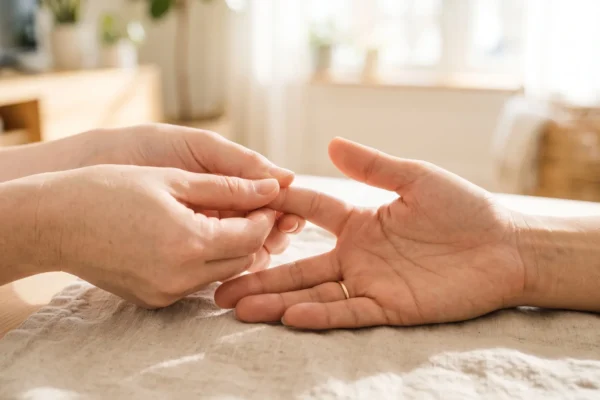
What Is a Trigger Finger?
The condition can affect one finger or several. It can show up in one hand or both. The ring finger and thumb are often involved, but any finger can be affected. When the thumb is involved, it is called trigger thumb.
The Medical Name for Trigger Finger
How Common Is It?
How Your Finger Tendons Normally Work
Each tendon slides through a series of snug tunnels called pulleys. The pulleys hold the tendon close to the bone. This works a lot like the guides that hold fishing line along a fishing rod. In a healthy finger, the tendon glides back and forth through these tunnels with ease.
The Role of the A1 Pulley
Signs of Trigger Finger
Common signs of trigger finger include:
- A tender lump or bump in the palm at the base of the affected finger
- A popping, clicking, or catching feeling when you move the finger
- Pain when you bend or straighten the finger, which may spread into the palm
- Stiffness, especially after a period of rest
- The finger getting stuck in a bent position
When Your Finger Locks Up
Why Symptoms Feel Worse in the Morning
What Causes Trigger Finger?
Repeated hard gripping or pinching may play a role for some people. Jobs and hobbies that involve firm, repetitive hand use are linked to the condition. Examples include working with tools, gardening, and playing certain instruments or racket sports.
It is worth knowing that trigger finger is not caused by a single injury or a bump to the hand. It is also not something you can catch from another person. In young children, a related form can affect the thumb and is usually noticed by a parent or a pediatric provider. For most adults, though, the reason for trigger finger stays a bit of a mystery, and that is normal.
Who Is More Likely to Get It
Health Conditions Linked to It
During recovery, it also helps to treat any underlying cause. If a bacterial infection is behind the pericarditis, antibiotics may be needed; if an autoimmune condition or kidney problem is involved, managing that condition is part of the plan. Your doctor will tailor treatment to what they find, and will let you know how long to rest and when it is safe to build back up. Reporting new or worsening symptoms promptly keeps recovery on track.
How Trigger Finger Affects Everyday Tasks
The good news is that the condition rarely comes on suddenly out of nowhere. Most people notice the signs building over time. This gives you a chance to learn what is happening and to look into the options before symptoms become severe.
How Trigger Finger Is Diagnosed
Sometimes a provider may use imaging, such as an ultrasound, to look at the tendon more closely. X-rays are not usually needed, but they can help rule out other problems. Telling your provider when the symptoms started, and what makes them worse, gives helpful clues.
Common Ways Trigger Finger Is Managed
Rest and Activity Changes
Splints and Bracing
Hand Exercises and Therapy
Injections and Other Medical Options
Recovery looks different for each person and depends on the option chosen. Some people notice steady improvement over a few weeks, while others need several months to feel back to normal. Following the plan your provider sets, and giving the hand time to heal, can support a smoother recovery. Keeping up with any suggested stretches may also help the finger move well again.
When to See a Provider
Seeing someone in person does not always mean a trip to a clinic. Some providers offer in-home visits for people who find it hard to travel. Whatever path you choose, an accurate diagnosis is the first step toward relief.
Frequently Asked Questions
Does the trigger finger go away on its own?
Some mild cases of trigger finger may ease with rest, but many do not fully clear without care. The catching and locking often build over time. A provider can look at your hand and explain the choices that fit your situation.
What is the medical name for trigger finger?
The medical name for trigger finger is stenosing tenosynovitis. The term points to swelling and narrowing around the tendon and its covering. Most people just say trigger finger because it is easier to remember.
What causes trigger finger?
In most cases, there is no clear reason for the trigger finger, and the swelling around the tendon begins on its own. Repeated hard gripping or pinching may play a role for some people. Health conditions such as diabetes and rheumatoid arthritis are also linked to it.
Is trigger finger linked to arthritis?
Trigger finger and arthritis are separate conditions, but they can be connected. Rheumatoid arthritis is one of the health conditions that raises the risk of trigger finger. Having one does not mean you will get the other.
Why is trigger finger worse in the morning?
Stiffness and locking tend to be strongest after periods of rest, such as overnight. The finger often loosens up as you use your hand during the day. This morning pattern is a common feature of the condition.
Can trigger finger affect more than one finger?
Yes, trigger finger can affect one finger or several at the same time. It can also show up in one hand or in both hands. The ring finger and thumb are often involved, but any finger can be affected.