This content is for informational purposes only and does not substitute professional medical advice. Always consult a physician for diagnosis and treatment.
Modern home recovery for hiking injuries centers on the PEACE & LOVE protocol, which officially replaced the outdated RICE method in 2025–2026. During the first 72 hours, the focus remains on tissue protection (PEACE) without the use of ice or anti-inflammatory drugs, followed by a phased loading approach (LOVE) to stimulate collagen repair. For active Conejo Valley residents, timely injury help combined with professional at-home diagnostics allows for a safe return to the Santa Monica Mountains while minimizing the risk of long-term complications.
Emergency Triage: When Is It Time to Stop Self-Treating?
For those who sustain an injury on the rocky terrain near Agoura Hills or Thousand Oaks, the primary task is to objectively assess the severity of the condition. American clinical guidelines for 2025 identify several “red flags” where attempting to manage an injury alone becomes risky.
Checklist: When to Seek Immediate Medical Advice
Home treatment is contraindicated if the following signs are present:
-
Inability to Bear Weight: The patient cannot take four steps, fully transferring weight to the injured leg.
-
Audible “Pop” or “Snap”: An audible sound at the moment of the incident often indicates a ligament tear, such as the Anterior Cruciate Ligament (ACL).
-
Deformation: Visible changes in the normal anatomical contours of the joint or bone.
-
Extreme Pain: Persistent, throbbing extreme pain that does not subside even at rest.
-
Neurological Symptoms: Numbness, tingling, or weakness in the limb below the site of injury.
Modern Diagnostics at Home in the Conejo Valley
Navigating the 101 Freeway to reach an Emergency Room (ER) adds unnecessary stress and risks further damaging soft tissues. In these situations, mobile healthcare services like Doctor2me provide an ideal solution. A qualified medical examination in Agoura Hills, Thousand Oaks, or Oak Park right at home allows for a definitive diagnosis without the hassle of travel or crowded waiting rooms—crucial for both physical safety and patient peace of mind.
For the senior community in Newbury Park and Westlake Village (ages 65+), who are statistically at a higher risk for hip fractures during falls, the rehabilitation strategy may require more comprehensive support. In cases where an injury leads to significant mobility limitations or requires long-term symptom management, organizations like Westlake Village Hospice Inc offer specialized palliative care and pain management programs at home. This ensures continuity of care and psychological support, helping patients manage the aftermath of an incident in a familiar environment.
The Protocol Evolution: Why RICE Is Outdated
A fundamental shift in U.S. sports medicine occurred following a reevaluation of inflammation’s role in healing. Previously, swelling was viewed as a “foe” to be suppressed with ice and medication. Today, evidence proves that inflammation is a necessary “cleanup” process that clears damaged cells and triggers regeneration.
Myth vs. Reality (2026 Standards)
| Myth | Reality |
| Ice is the best remedy for pain and swelling. | Ice constricts blood vessels, preventing “repair cells” from reaching the injury site. |
| Absolute rest is required for any sprain. | Prolonged immobility causes the brain to lose its connection with the joint (proprioception). |
| Ibuprofen helps ligaments heal faster. | NSAIDs block the signals that tell the body to produce new collagen. |
Home First Aid Medication Comparison
| Category | Example (US Brands) | When to Use | Impact on Regeneration |
| Analgesics | Acetaminophen (Tylenol) | Days 1–3 (Acute Phase) | Neutral (Recommended) |
| NSAIDs | Ibuprofen (Advil), Naproxen | Day 4+ (Sub-acute Phase) | May delay early-stage repair |
| Topical Agents | Calamine Lotion | Toxic flora contact | Reduces itching without interference |
The PEACE & LOVE Protocol: A Step-by-Step Guide
Phase 1: PEACE (Days 1–3) — Protection and Rest
-
P (Protect): Restrict movement for 1–3 days to prevent further micro-tears and excessive fluid buildup.
-
E (Elevate): Keep the limb above heart level to facilitate natural fluid drainage (lymphatic drainage).
-
A (Avoid): Abstain from anti-inflammatories and ice. Give the body 72 hours for a natural “repair” start.
-
C (Compress): Using elastic bandages or taping helps manage the volume of the swelling.
-
E (Educate): Understand that pain is a useful boundary, not a reason for panic.
Phase 2: LOVE (Day 4 and Beyond) — Active Recovery
-
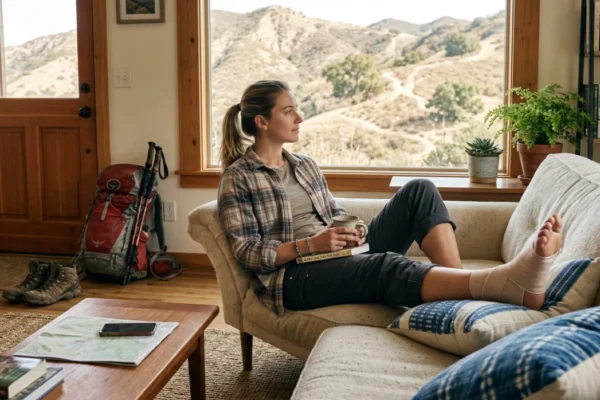
L (Load): Gradually reintroduce weight-bearing. Mechanotransduction is the process where physical pressure signals cells to build stronger tissue.
-
O (Optimism): A positive mindset directly accelerates recovery via brain neuroplasticity.
-
V (Vascularization): Low-impact aerobic activity (swimming, stationary cycling) improves nutrient delivery to the injured area.
-
E (Exercise): Balance and strength training restore proprioception—the brain’s ability to sense joint position.
Phase 2: LOVE (Day 4 and Beyond) — Active Recovery
-
L (Load): Gradually reintroduce weight-bearing. Mechanotransduction is the process where physical pressure signals cells to build stronger tissue.
-
O (Optimism): A positive mindset directly accelerates recovery via brain neuroplasticity.
-
V (Vascularization): Low-impact aerobic activity (swimming, stationary cycling) improves nutrient delivery to the injured area.
-
E (Exercise): Balance and strength training restore proprioception—the brain’s ability to sense joint position.
Managing Specific Injuries: First Aid Tips
Statistics show that the ankle remains the most vulnerable zone, accounting for 42% of hiking-related incidents.
Leg Sprain Treatment: Managing Ligaments
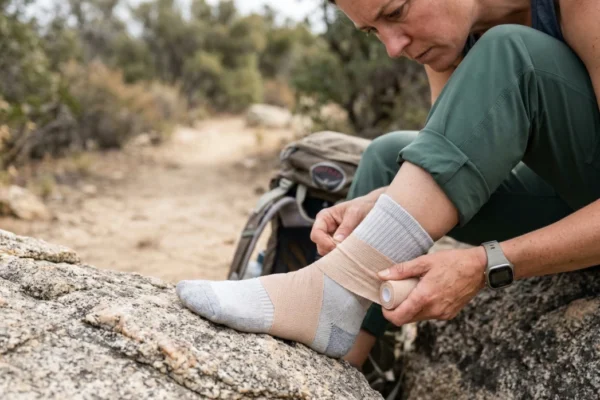
When dealing with a sprain (leg sprain treatment), it is vital to distinguish the grade of severity. Grade I (micro-tears) can be treated at home in 1–2 weeks. Grade II requires a brace for stability. The primary goal is to restore joint stability to prevent chronic instability in the future.
Muscle Strain Treatment and Common Causes
The leading causes of muscle pull on steep trails are rapid descents and inadequate warm-ups. Effective muscle strain treatment is built on the principle of gradual progression. Dynamic stretching is considered the best muscle strain remedy during the sub-acute phase, restoring elasticity without the risk of new tears.
Local Risks: Ticks and Poison Oak in 91301–91377
For hikers in Agoura Hills and Oak Park, encounters with urushiol—the toxic oil in Poison Oak—are a common occurrence.
First Aid Tips for Outdoor Encounters
-
Poison Oak: If contact occurs, you have a 10–30 minute window to wash the oil off. Simple dish soap often breaks down urushiol better than expensive antiseptics.
-
Ticks: In 2026, removal time is recognized as a critical factor. According to CDC guidelines, if a tick has been attached for over 36 hours, discuss a single dose of Doxycycline with a provider. Always use tweezers to pull the tick straight up.
-
Blisters: Never “roof” a blister. The skin serves as a sterile barrier. Protect the area with Moleskin by cutting a “donut” shape to surround and cushion the blister.
Thermal Stress and Help with Leg Swelling
Summer temperatures in Newbury Park and Thousand Oaks frequently trigger heat-related issues and lower extremity edema.
Managing Swelling and Overheating
| Condition | Symptoms | Home Strategy |
| Heat Exhaustion | Heavy sweating, nausea, paleness. | Shade, cool water, electrolytes. |
| Heat Stroke | Temp >104°F, confusion, dry skin. | Call 911 immediately. Active cooling with ice packs. |
Prophylaxis and Injury Prevention in the Conejo Valley
The U.S. first aid market is shifting toward high-tech preventative solutions. Comprehensive injury prevention is significantly more cost-effective than Search and Rescue (SAR) operations.
Fall Injury Prevention: Avoiding Accidents
Robust fall injury prevention on the steep slopes of 91301 and 91362 includes:
-
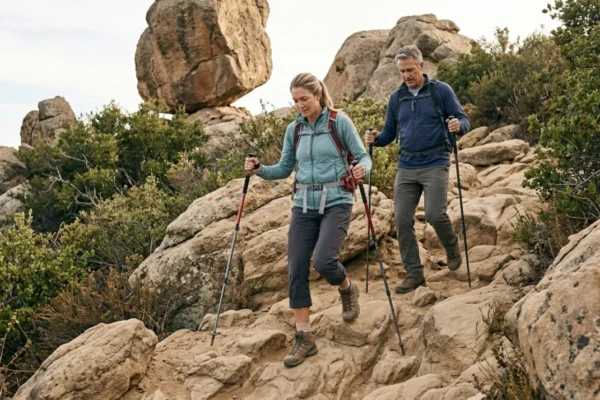
Gear: Trekking poles reduce knee joint load by 20–25% during descents.
-
Footwear: Using trail-specific shoes with aggressive outsoles and ankle support.
-
Hemostatics: Keeping modern chitosan-based dressings in your kit for rapid bleeding control after falls on rocky terrain.
The modern approach to hiking injuries in 2026 is a balance between biology and technology. Utilizing the PEACE & LOVE protocol instead of aggressive symptom suppression allows residents of Agoura Hills and Thousand Oaks to recover faster and more effectively. When in doubt, seeking professional diagnostics at home remains the most reliable way to prevent long-term complications and ensure a safe return to an active lifestyle.
Frequently Asked Questions
How do I know if my ankle injury is a sprain or a fracture?
Use the “four-step rule”: if you cannot bear weight for four steps or feel sharp pain directly on the bone, it may be a break. If you heard an audible “pop” or see visible deformation, seek professional injury help immediately to rule out a serious ligament tear.
Should I use ice for a hiking injury?
Can I take Advil or Ibuprofen right after a muscle pull?
What is the best way to get help with leg swelling after a hike?
Elevating your legs above heart level for 15–20 minutes is the most effective way to encourage lymphatic drainage and reduce edema. If swelling is paired with heat exhaustion symptoms like nausea or dizziness, ensure you also prioritize rehydration with electrolytes.
How should I treat a blister during or after a hike?
One of the most critical first aid tips is to keep the skin over the blister intact, as it serves as a natural sterile bandage. Apply a Moleskin “donut” around the area to relieve pressure and prevent further friction, which helps the underlying tissue heal without infection.
What should I do if I find a tick on my skin after a hike in the Santa Monica Mountains?
Use fine-tipped tweezers to grasp the tick as close to the skin as possible and pull upward with steady pressure without twisting. Monitor the bite site for 30 days for a target-shaped rash, and consult a healthcare provider if the tick was attached for more than 36 hours.
When is it better to request a home medical visit instead of going to the ER?
If you have a potential leg sprain treatment need but want to avoid the stress of traveling on the 101 Freeway, a home visit from a service like Doctor2me is ideal. This allows residents in Agoura Hills and Thousand Oaks to receive expert diagnostics and an X-ray referral without the long wait times of a traditional emergency room.
Sources Used:
- Musculoskeletal injuries during trail sports: Sex- and age-specific … — https://pubmed.ncbi.nlm.nih.gov/38454756/
- Hiking Accident Statistics and Facts (2026) – Market Media — https://media.market.us/hiking-accident-statistics/
- Review of PEACE and LOVE the new era of RICE in acute soft tissue injury management? — https://pmc.ncbi.nlm.nih.gov/articles/PMC12489226/
- Sprains – Diagnosis and treatment – Mayo Clinic — https://www.mayoclinic.org/diseases-conditions/sprains/diagnosis-treatment/drc-20377943/
- Forget RICE: Why PEACE & LOVE is the Modern Approach to Injury Recovery — https://ptsmc.com/rice-vs-peace-and-love/
- Blisters: First aid – Mayo Clinic — https://www.mayoclinic.org/first-aid/first-aid-blisters/basics/art-20056691/
- Preventing Tick Bites – CDC — https://www.cdc.gov/ticks/prevention/index.html
- Poisonous Plants and Work | Outdoor – CDC — https://www.cdc.gov/niosh/outdoor-workers/about/poisonous-plants.html
- First Aid Kit Market Size, Share, Growth Analysis | CAGR of 5.7% — https://market.us/report/global-first-aid-kit-market/