This content is for informational purposes only and does not substitute professional medical advice. Always consult a physician for diagnosis and treatment.
Palliative care for heart failure adds a second team focused on symptoms and daily life. Cardiology keeps treating the heart at the same time.
The word scares families more than the service does. Most people hear it and picture the last few weeks. In practice it is specialist help with breathlessness, exhaustion, sleep, appetite and decisions, and it can run for years.
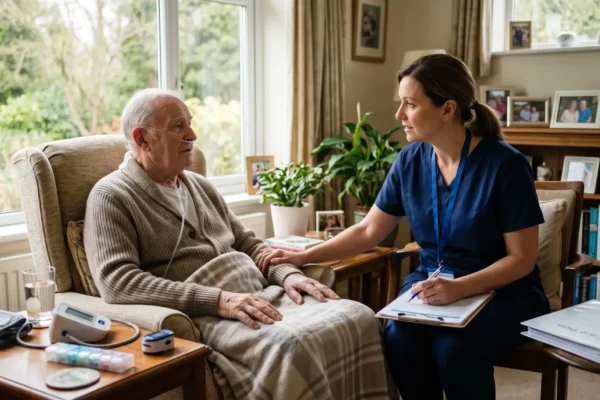
What Is Palliative Care for Heart Failure?
MedlinePlus (2026) describes the goal as helping people with serious illnesses feel better by preventing or treating symptoms and side effects of both the disease and its treatment. It also covers emotional, social, practical and spiritual problems that an illness brings.
Heart disease is one of the conditions named directly. A palliative team can include doctors, nurses, nurse practitioners, physician assistants, registered dietitians, social workers, psychologists, massage therapists and chaplains, and services are offered by hospitals, home care agencies and long-term care facilities.
One line in that description matters more than the rest for heart failure families. While receiving palliative care, a person remains under the care of their regular provider and continues treatment for the disease.
How Is Palliative Care Different From Hospice?
Palliative care can begin at diagnosis and run alongside treatment. Hospice begins after treatment of the disease has stopped and when it is clear the person will not survive the illness, and it is most often offered when a person is expected to live six months or less.
That difference is why someone can be on palliative care for years and never enter hospice, or move from one to the other when the picture changes. The table below sets the two side by side.
| Question | Palliative Care | Hospice |
|---|---|---|
| When it can start | At diagnosis, during treatment, at follow-up, or at the end of life | After treatment of the disease is stopped and it is clear the illness will not be survived |
| Treatment for the disease | Continues at the same time | Has already stopped |
| Expected time frame | No set time frame; it follows your needs and your plan | Most often offered when a person is expected to live six months or less |
| Where it is offered | Hospitals, home care agencies, cancer centers, long-term care facilities, and at home | Home, a facility, or a dedicated hospice program |
Families who are weighing both at once often find it easier to ask the questions out loud, and what to ask when choosing hospice in Conejo Valley covers that side of the conversation. Local agencies including Eternal Life Hospice serve Ventura and Los Angeles counties.
Does Palliative Care Mean Giving Up?
The American Heart Association reported in 2024 that palliative care complements medical care by relieving the symptoms and stress of a serious illness, and that it is not a treatment for the illness itself. The same report described palliative care as greatly underused in heart disease, citing a study in which fewer than 20% of US veterans with end-stage heart disease received it within a year of a hospitalization.
The evidence runs the other way from the fear. Integrating palliative care into an evidence-based treatment plan has been shown to improve quality of life, reduce depression and anxiety, improve spiritual well-being, and lower the risk of hospital readmission for people with advanced heart disease.
Referral patterns reveal the same problem from another angle. People with heart failure who get referred are predominantly white, of higher socioeconomic status, and more likely to be treated at academic medical centers, which means plenty of people who would benefit never hear the word at all.
Can You Keep Treating the Heart at the Same Time?
Medication management is one of the main things a palliative team does, and it works in both directions. It may mean adding something for breathlessness, pain, low mood or nausea. It may also mean adjusting a heart medicine so it controls fluid and symptoms better day to day.
Sometimes it means removing things. A palliative team may taper or withdraw a medicine when the time it would take to produce a benefit is longer than the person’s expected life span, or when someone is taking so many medicines that the side effects have become their own problem. Doses get reduced and medicines get switched based on how the person responds.
That work needs the cardiologist in the room. The AHA statement urged a team-based approach involving cardiologists together with primary care and palliative care professionals, precisely because the medication picture in heart failure is complicated.
When Should Palliative Care Start in Heart Failure?
Heart Failure Stages
For stages C and D, clinicians also assign a New York Heart Association class from I to IV, based on how much ordinary activity a person can manage. Class IV means symptoms at rest, where any physical activity adds discomfort.
The Practical Trigger
In day-to-day terms, the triggers families recognize are repeat hospital admissions, breathlessness that limits a trip to the mailbox, weight and fluid that will not stay stable, and the first conversation about resuscitation preferences. Any of those is a reasonable moment to ask for a referral.
Nobody has to wait to be offered it. A provider can refer to a palliative specialist, and if the subject never comes up, a patient or family member can ask for the referral directly.
What Does Palliative Care Actually Help With?
Breathlessness, Weakness and Dry Mouth
Breathlessness came through in the patients’ own words. The descriptors most often rated severe were that breathing is exhausting, that breathing is distressing, and feeling short of breath. Those are different problems from a number on a test, and they are the kind of thing a palliative team is built to work on.
Survival in that cohort was 17.1 months. It describes one group of patients already referred for supportive care rather than a prediction for any individual, but it does show the window is usually longer than the few weeks families imagine when the subject comes up.
The Parts That Are Not Physical
Emotional support is part of the same package, through counseling, support groups, family meetings and referrals to mental health providers. Spiritual questions get space as well, which matters to some families and not at all to others.
How Do You Get Palliative Care at Home in Conejo Valley?
Ask the cardiologist or primary care provider for a palliative care referral by name. If the practice does not have an established pathway, hospital-based palliative services and home care agencies both take outside referrals, and a social worker at the last hospital discharge is often the fastest route.
Cost is less of a barrier than families assume. MedlinePlus notes that palliative care is almost always covered by health insurance, including Medicare and Medicaid, and suggests talking to a social worker or a hospital financial counselor if there is no coverage.
Equipment usually arrives in parallel. Oxygen, a hospital bed, a bedside commode or a lift chair can change what is possible at home far more than people expect, and suppliers such as Medlife Medical Supply, Inc. deliver durable medical equipment across Ventura County and Los Angeles County.
Staffing is the other half. It helps to know who actually comes to the door, and whether that person is a caregiver, a home health aide or a nurse, because the three roles do different things. In-home physical therapy in Westlake Village can also keep someone moving safely at a stage when leaving the house for appointments has become the hard part. For the medical visits themselves, a clinician who comes to the home removes the trip entirely.
Frequently Asked Questions
Can someone leave palliative care if they feel better?
Yes. It is not a one-way door, and people step back from it when symptoms settle and return to it later if things change.
Does accepting palliative care change a resuscitation order?
No. A code status is a separate decision that the patient makes with their doctor, and palliative care does not alter it by default.
Will the cardiologist stop seeing the patient?
No. The cardiology plan continues, and the palliative team works alongside it rather than replacing anyone.
Is there palliative care for the family as well as the patient?
Support for family members is built into the model, through family meetings, counseling referrals and help with practical problems that fall on relatives.
What happens to palliative care if the person goes into hospital?
Hospitals are one of the main places palliative care is delivered, so the team usually continues there, though the individuals involved may differ between settings.
Can palliative care help with decisions about devices?
It often does. Conversations about implanted devices, including what happens to them later, sit squarely in the shared decision-making work that palliative and cardiology teams do together.
Sources Used
Classes and Stages of Heart Failure – American Heart Association (2025)
Comprehensive Symptom Assessment of Patients With End-Stage Heart Failure Referred to Palliative Care – Heart, Lung and Circulation (2026)
Palliative care underused for people with heart disease, report finds – American Heart Association News (2024)
What is palliative care? – MedlinePlus (2026)