This content is for informational purposes only and does not substitute professional medical advice. Always consult a physician for diagnosis and treatment.
Dry eye happens when your eyes do not make enough tears, or when your tears dry up too fast. It becomes more common as you get older, and it can leave your eyes feeling gritty, scratchy, or burning. Many people also notice dry eyes and blurry vision that comes and goes. The good news is that dry eyes can be managed. There are many ways to find relief, from simple eye drops to small procedures like punctal plugs.
If your daily medications might be part of the problem, a doctor can review them with you. You do not have to sit in a waiting room to get that help. With Doctor2me, you can choose your own doctor and have them visit your home the same day, which saves you a trip and lowers the risk of catching an infection.
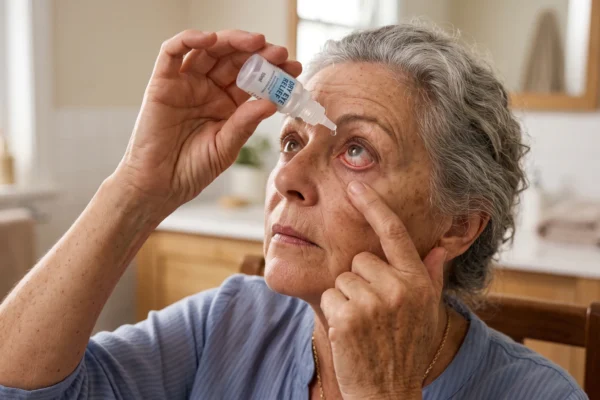
What Dry Eye Is and Why It Gets Worse With Age
How Tears Are Supposed to Work
Why Age Raises Your Risk
Signs and Symptoms to Watch For
The Gritty, Sandy Feeling
When Watery Eyes Mean Dry Eyes
What Causes Dry Eye
Medications That Cause Dry Eyes
Health Conditions and Surgery
How Dry Eye Is Diagnosed
Treatment Options for Dry Eye
Over-the-Counter Eye Drops
Prescription Drugs for Dry Eyes
Punctal Plugs and Other Procedures
Special Contact Lenses
Simple Habits That Help at Home
When to See a Doctor
Frequently Asked Questions
How do you fix dry eyes?
Most mild dry eyes are managed, not cured. Start with over-the-counter artificial tears and simple habits like using a humidifier and taking screen breaks. If that is not enough, an eye doctor can offer prescription drops, punctal plugs, or other treatments based on the cause.
What causes dry eyes all of a sudden?
A sudden bout of dry eye is often tied to a change, such as a new medicine, dry or windy weather, long screen time, or getting over an illness. Hormone shifts and age can play a role too. If it does not settle down, have an eye doctor check for a cause.
What is the best solution for dry eyes?
There is no single best fix, because the right treatment depends on the cause. Artificial tears help most mild cases, while more serious dry eyes may need prescription drops, punctal plugs, or special lenses. An eye exam is the best way to find what will work for you.
Is dry eye painful?
Dry eyes are usually more uncomfortable than truly painful. It often feels gritty, scratchy, or burning, like something is in your eye. But severe or untreated dry eyes can cause real pain and even damage the eye’s surface, so lasting pain is a reason to see a doctor.
What are the best eye drops for dry, gritty eyes?
Artificial tears are the usual first choice for gritty, dry eyes. If you use drops often, preservative-free versions are gentler on the eyes. Since brands vary, you may need to try a few, and an eye doctor can point you toward the right type for your case.
Do I need eye drops after LASIK?
Dry eye is common for a while after LASIK, so eye doctors often recommend artificial tears during the healing period. For most people this dryness is temporary. If it lasts or feels severe, follow up with your surgeon or eye doctor for further care.