This content is for informational purposes only and does not substitute professional medical advice. Always consult a physician for diagnosis and treatment.
Tai chi is a gentle, slow-motion exercise that can improve balance and help older adults stay steady and avoid falls. It blends flowing movements, deep breathing, and a calm, focused mind. You do not need to be fit or flexible to begin, which is why so many people start it later in life. This is a simple guide to all about tai chi and how this quiet practice can keep you safe on your feet.
Before you start any new exercise, it is smart to check with a doctor, especially if you take medicine that can make you feel dizzy or lightheaded. With Doctor2me, you can pick a doctor who comes to your home, so you can talk it through in a comfortable setting without sitting in a waiting room. Once you have the green light, tai chi is easy and safe to begin.
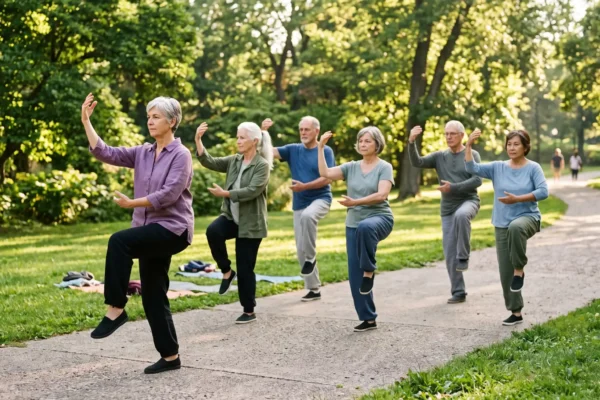
What Is Tai Chi?
A Gentle Type of Exercise
Where Tai Chi Comes From
What Happens in a Class
- A warm-up with easy motions, like shoulder circles or gentle rocking, to loosen your muscles
- Learning and practicing forms, which are short sets of flowing movements
- Some gentle breathing work, sometimes called qigong, to relax the mind and calm the body
A shorter, slower form is usually best when you are older or just starting out. Nothing about it needs to be hard, and there is no rush to keep up. Most teachers will let you watch a class first so you can see if you feel comfortable.
Tai Chi Health Benefits
Strength, Flexibility, and Well-Being
Tai Chi and the Mind
Tai Chi and Blood Pressure
Tai Chi for Balance and Fall Prevention
Why Falls Matter for Older Adults
How Tai Chi Improves Balance
These gentle tai chi exercises for balance are a big part of why doctors suggest the practice for older adults who want to stay steady. This is exactly why tai chi for older adults is recommended so often in senior centers and community programs. With regular practice, many people feel more sure of themselves within a few months, and that new confidence often makes them more active in daily life.
Tai Chi Exercises for Hip Pain and Sore Joints
Easing Arthritis and Joint Pain
For ongoing joint pain, hands-on care can add to what tai chi offers. A practice such as Comprehensive Natural Healthcare in Encino provides physical therapy and acupuncture, which some people use alongside gentle exercise to manage stubborn hip and joint pain. Pairing daily movement with this kind of care can help you stay active longer.
Who Can Do Tai Chi?
A Good Fit for Many Health Needs
For older adults living with more than one health condition, this flexibility is a real gift. A gentle routine you can stick with beats a hard workout you quit after a week. Many people find that starting small, even ten minutes a day, is enough to build a lasting habit that pays off in better balance and calmness.
How to Get Started with Tai Chi
Finding a Class or Practicing at Home
- Wear loose, comfortable clothes that let you move freely
- Choose flat, non-slip shoes, or practice in bare feet if that feels steady
- Start with a short, slow form and build up over time
- Practice near a sturdy chair or counter if your balance is shaky
Staying Safe While You Practice
Frequently Asked Questions
Does tai chi prevent falls in the elderly?
Tai chi may help prevent falls by improving balance, leg strength, and flexibility in older adults. It also helps train your sense of where your body is in space and can lower the fear of falling. It works best when practiced regularly over several months.
Does tai chi help seniors with balance?
Yes. Tai chi improves balance and steadiness, which is one of the main reasons older adults take it up. The slow, controlled movements build the strength and coordination that help you stay on your feet.
How does tai chi help with balance?
Tai chi trains your body to sense its position in space, a skill that fades with age. It also strengthens your legs and core, so you can catch yourself after a stumble. Over time, it can lower the fear of falling, which itself makes falls less likely.
What are the benefits of tai chi?
Tai chi can improve balance, strength, and flexibility, and it may ease joint pain. It also lowers stress and may support quality of life, mood, and thinking skills in older adults. Because it is gentle, almost anyone can try it.
Can tai chi help with COPD?
Researchers have studied tai chi as gentle exercise for people with chronic lung conditions like COPD, and results look promising. The slow breathing and movement may help with fitness and calm. Talk with your doctor before starting if you have a lung condition.
Is tai chi recommended for balance and fall prevention?
Yes. Tai chi is widely suggested as a safe, gentle way for older adults to improve balance and reduce fall risk. Many senior programs use it for exactly this purpose.