This content is for informational purposes only and does not substitute professional medical advice. Always consult a physician for diagnosis and treatment.
Snoring is common and often harmless, but loud snoring that is broken up by silent pauses and then a gasp can be a sign of something more serious: sleep apnea, a condition in which breathing repeatedly stops during sleep. The tricky part is that the person doing the snoring usually has no idea. Johns Hopkins Medicine notes that as many as 9 in 10 people with obstructive sleep apnea do not know they have it. This guide explains what snoring is, how to tell ordinary snoring from sleep apnea, why untreated apnea is risky, and what actually helps.
The Mechanics of Snoring
A few things make the airway narrower and the snoring louder. Nasal congestion forces more air through a tight space, alcohol and sleeping pills relax the throat muscles more than usual, and lying on your back lets the tongue and soft palate settle backward. Weight around the neck adds pressure from the outside. None of these guarantee sleep apnea, but they all push snoring in a louder, and sometimes riskier, direction.
Simple Snoring vs. Obstructive Sleep Apnea
Simple Snoring
Obstructive Sleep Apnea
What a bed partner often describes is telling: loud snoring, then a stretch of eerie silence, then a sudden snort or gasp as breathing kicks back in. That silent stretch is the quiet apnea episode, and the louder the snoring and the longer the pause, the more it is worth checking out. In moderate to severe apnea, this cycle can repeat many times an hour, all night long, without the sleeper ever fully waking.
Signs That Snoring Might Be Sleep Apnea
- Loud snoring interrupted by silent pauses in breathing
- Gasping, snorting, or choking that restarts the breath
- Waking up short of breath during the night
- Daytime sleepiness, morning headaches, or a dry mouth on waking
- Trouble concentrating or feeling unrefreshed after a full night in bed
Often it is a partner who notices the pauses, since the sleeper sleeps through them. Recording yourself overnight, or simply asking whoever shares the room, can turn a vague worry into something concrete to bring to a doctor.
It also helps to notice how you feel during the day. Sleep apnea fragments rest so thoroughly that a person can spend eight hours in bed and still wake up exhausted. Nodding off in a quiet moment, foggy thinking, irritability, and a headache that fades as the morning goes on are all easy to blame on a busy life, when the real cause may be a night of interrupted breathing.
The Risks of Ignoring Sleep Apnea
The heart connection is worth taking seriously, because apnea and heart strain feed each other over time. For families already coping with a cardiac condition, this look at in-home palliative care for heart failure shows how closely breathing and heart health are tied together in later life.
Who Is More Likely to Have Sleep Apnea
Age changes the picture too. Muscle tone in the throat tends to relax with the years, so snoring and apnea become more common later in life. That does not make them a normal part of aging to shrug off, though. Treating apnea can sharpen daytime energy and thinking, which matters just as much at 70 as it does at 40.
How Sleep Apnea Is Diagnosed
A sleep study measures more than whether you stop breathing. It records how often the pauses happen each hour, how far your blood oxygen falls, your heart rate, and how much your sleep is broken up. Those details tell a doctor how severe the apnea is, which in turn guides the treatment. Getting evaluated is worth it even if the idea of a sleep study feels like a hassle, because the answer either sets your mind at ease or points to a fixable problem.
Treatment and Everyday Changes That Help
Medical Treatments
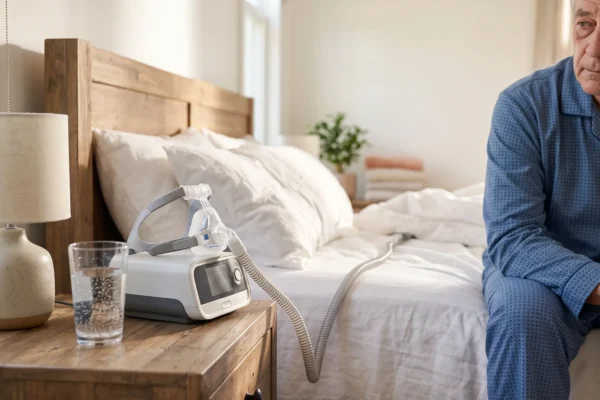
A CPAP machine takes some getting used to, and many people give up too soon. Working with a provider to fine-tune the mask fit and air pressure often turns an uncomfortable first week into steady, restful nights. The payoff can be dramatic: sounder sleep, more daytime energy, and less strain on the heart over the long run.
Everyday Habits
There is no one right bedtime routine, but the goal is simple: give your airway the easiest possible path to stay open through the night. A cool, dark room, a consistent sleep schedule, and keeping the last drink of the evening well before bed all point in the same direction.
Frequently Asked Questions
Does loud snoring always mean I have sleep apnea?
No. Not everyone who snores has sleep apnea, and snoring on its own is often harmless. The warning sign is snoring broken up by silent pauses and then a gasp, snort, or choking sound, especially when paired with daytime sleepiness.
What is the difference between simple snoring and sleep apnea?
With simple snoring the airway stays at least partly open and air keeps moving. With obstructive sleep apnea the throat tissue collapses and fully blocks the airway, so breathing actually stops until the brain briefly wakes you to gasp for air. This can happen many times an hour.
How do I know if I stop breathing in my sleep?
You often won’t know on your own, because the brief awakenings are too short to remember, and up to 9 in 10 people with sleep apnea don’t realize they have it. A bed partner usually notices the pauses or gasping. Clues you can catch yourself include waking short of breath, morning headaches, and heavy daytime sleepiness.
How is sleep apnea diagnosed?
A doctor reviews your symptoms and then usually orders a sleep study. This can be an overnight in-lab study that tracks breathing, heart rate, and blood oxygen, or a simpler home sleep test. Home tests suit straightforward cases, while a lab study is better with other heart or lung conditions.
Why is untreated sleep apnea dangerous?
Every time breathing stops, oxygen drops and the body is stressed, which over time raises blood pressure and strains the heart. Untreated sleep apnea is linked to high blood pressure, irregular heart rhythms, heart failure, stroke, and daytime drowsiness that raises accident risk.
Can lifestyle changes help snoring and sleep apnea?
Yes. Losing extra weight, sleeping on your side, avoiding alcohol and sedatives before bed, and easing nasal congestion can all reduce snoring and breathing pauses. These habits work best alongside medical treatment such as a CPAP machine or an oral appliance.