Medi-Cal transportation covers rides to covered medical care, arranged through your health plan. Original Medicare does not, apart from ambulance trips that are medically necessary.
That split explains most of the confusion. The Centers for Medicare & Medicaid Services (2025) describes non-emergency medical transportation as a benefit for people who need help getting to and from medical appointments, and it is part of Medicaid, which in California is Medi-Cal. Medicare treats rides as something extra, not as a standard benefit.
Who Pays for a Ride to the Doctor in Ventura County?
The CMS guidance for this benefit covers the difference between emergency and non-emergency transportation, the accepted types of transportation, and the service delivery systems states use. In plain terms: the ride, the kind of vehicle and the booking process are all set by your state and your plan, not by one national rulebook.
Which plan you are in therefore decides more than the diagnosis does. If you are not sure how your plan handles referrals, vehicles and networks, this explainer on how an HMO or a PPO decides which local specialists you can see covers the same machinery that controls your ride benefit.
Does Medi-Cal Cover Non-Emergency Transportation?
The gap is awareness rather than eligibility. A 2025 study in Health Affairs Scholar found that the benefit’s impact was limited by low reported awareness and use, and that 15% of expansion members who had the benefit still reported missing a health visit over transportation in the previous six months.
So the first move is a phone call, not a web search. The member services number on the back of your Medi-Cal plan card is the line that books rides, and asking directly what the plan covers takes less time than piecing it together from third-party pages.
Does Medicare Cover Rides to Doctor Appointments?
That rules out most of what people actually need. A ride to a follow-up visit, a lab draw or a specialist across the Conejo Valley is not an ambulance trip, so Original Medicare treats it as your own arrangement, however difficult the logistics are at the time.
Medicare Advantage is where it gets interesting. A 2024 analysis in JAMA Network Open of Medicare Advantage plans from 2020 to 2024 found a non-emergency transportation benefit in 44.5% of traditional Medicare Advantage plans, and in all of the plans tested under the value-based insurance design model.
How Common Is the Medicare Advantage Transportation Benefit?
The same study looked at whether the benefit lands where the need is, using vehicle ownership, income, self-reported health, avoidable hospital visits and access to primary care as indicators. That matters locally, because two neighbors on different plans can have completely different answers to the same question.
The practical takeaway is to check during open enrollment rather than after a problem starts. A transportation benefit is listed in the plan’s benefit summary, and it is one of the easier line items to compare between plans.
How Do You Book a Ride, and How Far Ahead?
Four questions get you most of the way: how far ahead to call, what kind of vehicle you qualify for, whether anyone needs to confirm the type of ride you need, and whether a companion can travel with you. Write the answers down, because the person booking your next ride may not be the person you spoke to.
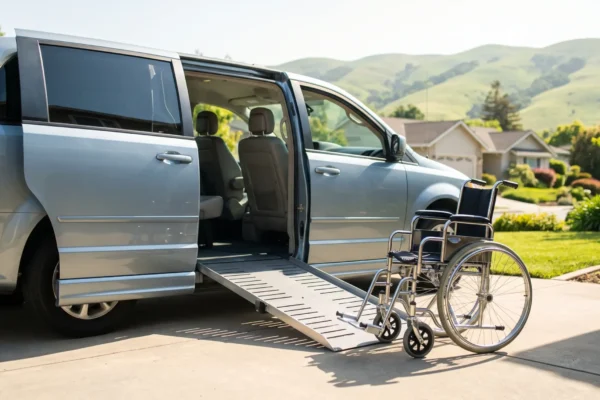
Private providers are the other route, and they are often how people solve a trip the plan will not cover. MediZoom Transportation runs non-emergency medical transportation across Ventura County, including wheelchair-accessible vehicles and discharge transfers, which is the kind of trip that does not fit an ambulance and is hard to do in a sedan.
Will Uber or Lyft Count, or Only a Medical Vehicle?
Plans decide which category you fall into, and the CMS guidance explicitly covers accepted types of transportation and vehicle and driver criteria. That is why a plan may approve one person’s rideshare trip and send a lift-equipped van for another, with no inconsistency involved.
If you are booking privately, say what you need in the first sentence of the call. Weight, mobility, stairs at home, oxygen and whether someone is traveling with you change the vehicle and the price, and sorting that out up front avoids a driver arriving who cannot take you.
Do You Need a Note Saying the Ride Is Medically Necessary?
For a Medi-Cal ride, ask your plan what it needs before you book. Some trips are approved on the member’s description alone, while others involve a confirmation of what kind of vehicle is appropriate, and your doctor’s office is used to being asked for that kind of paperwork.
One shortcut is worth knowing: the cheapest ride is the one you do not have to take. A telemedicine visit with a specialist removes the trip entirely for many follow-ups, and at-home blood draws do the same for routine lab work.
What If Transportation Keeps Getting in the Way?
Several services are built around that problem. A doctor who comes to the house can handle an assessment, a prescription review and basic testing at the kitchen table, and in-home physical therapy covers rehabilitation without a weekly drive to a clinic.
Local programs are worth asking about too. Your plan’s member services line can say which community transportation services it coordinates with in the Conejo Valley and Ventura County, and county senior services can list what is available locally for people who no longer drive.
Medi-Cal Versus Medicare at a Glance
|
Coverage Question |
Short Answer |
|---|---|
|
Routine ride to a covered appointment on Medi-Cal |
Covered as a program benefit, booked through your plan |
|
Routine ride to an appointment on Original Medicare |
Not covered; you arrange and pay for the trip |
|
Ambulance trip when other transport is unsafe |
Covered by Medicare when medical necessity is documented |
|
Rides on a Medicare Advantage plan |
Offered by some plans only – check the benefit summary |
If your situation falls between two rows, the plan decides, and the answer is written in your own plan documents rather than in general guidance like this page. The evidence of the coverage booklet is the document that settles it, and member services can point you to the page where transportation appears.
Frequently Asked Questions
Can a family member be paid for driving me instead?
Some Medicaid programs reimburse mileage or arrange other forms of transport, and the types allowed are set state by state. Ask your plan whether mileage for a friend or relative is one of the options it offers.
Does the benefit cover trips to a pharmacy or a dentist?
It covers trips to care the program covers, so the answer follows the service rather than the building. Pharmacy and dental trips are worth asking about specifically, since plans treat them differently.
What happens if my ride does not show up?
Call the booking line immediately rather than the clinic, since the plan or its transportation contractor is the one that can send a replacement and document the failure. Keep the confirmation number from when you booked.
Can someone ride with me to the appointment?
Often yes, especially for a person who needs help communicating or walking. It is a per-plan rule, so confirm it when you book rather than at the curb.
Is there a limit on how many rides I can get?
Limits vary by program and plan, and Medicare Advantage transportation benefits in particular are usually capped at a set number of one-way trips per year. Your benefit summary states the number.
Does a Medicare Advantage transportation benefit cover non-medical trips?
Some plans include trips to places like a grocery store as a separate non-medical benefit, while others limit rides to medical appointments. The two are listed separately in plan materials.
Sources Used
- Ambulance Services – Centers for Medicare & Medicaid Services (2026)
- Geographic variation in Medicare Advantage nonemergency medical transportation benefits 2020-2024 – Health Affairs Scholar, PubMed (2025)
- Non-Emergency Medical Transportation – Centers for Medicare & Medicaid Services (2025)
- Nonemergency Medical Transportation Benefit in Traditional Medicare Advantage and Value-Based Plans – JAMA Network Open (2024)
- Transportation barriers for Iowa Medicaid-enrolled adults with and without non-emergency medical transportation services – Health Affairs Scholar (2025)
- Ambulance services coverage – Medicare.gov