This content is for informational purposes only and does not substitute professional medical advice. Always consult a physician for diagnosis and treatment.
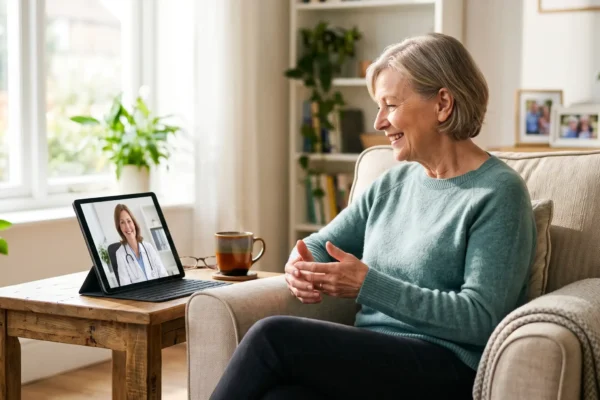
Telemedicine lets you meet many specialists by video, without the long drive over the hill. For a lot of visits, it works just as well as sitting in a waiting room.
This is not a fringe option anymore. According to CDC data (2024), physician telemedicine use jumped from 15.4% in 2019 to 86.5% in 2021, and it has stayed a regular part of care since.
For people in Westlake Village and the Conejo Valley, that can mean the difference between a quick call from home and a half-day round trip over the hill. This guide covers what works over video, when you still need to go in, how to get there when you do, and how coverage fits in.
What Telemedicine Is and When It Helps
The U.S. Department of Health and Human Services notes telehealth works well for checking on common problems, going over lab results, managing ongoing medicines, and even some therapy sessions.
It is not meant to replace every visit, and it does not try to. Telehealth is one more way to get care, used when it fits and set aside when a problem needs an in-person look.
Who Benefits Most
It also protects people who need to avoid crowded waiting rooms, such as those with weakened immune systems. Skipping the exposure and the travel can matter as much as the visit itself.
Distance is the other big one. If the nearest specialist for your condition is an hour away, video turns a full-day outing into a short appointment you can fit around the rest of your life.
Telehealth for Specialists: What Works Over Video
The evidence backs this up. In the same CDC report (2024), about 77% of primary care doctors and 73% of medical specialists said they could give similar quality of care over telemedicine, at least to some or a great extent.
Fields That Fit Video Well
Video also shines for ongoing conditions that need regular check-ins. Managing diabetes, blood pressure, or a mental health plan often means frequent short visits, and doing those from home keeps you on track without the travel piling up.
When You Still Need to See a Specialist in Person
Surgical and procedure-based care is the clearest example. In the CDC data (2024), nearly half of surgical specialists said telemedicine was not appropriate for their patients, since exams and procedures need to happen in person.
Exams, Procedures, and Emergencies
Sudden or severe symptoms are their own category. Chest pain, trouble breathing, or signs of a stroke are emergencies, not telehealth visits, and they call for 911 or the nearest emergency room right away.
Telehealth or In-Person: What Fits Best
Treat it as a rough guide. When you are unsure, the office can tell you whether your specific visit can be done by video before you book.
| Often Works Over Video | Usually Needs to Be In Person |
|---|---|
| Follow-ups and medication check-ins | First visits that need a hands-on exam |
| Reviewing test results and scans | Bloodwork, imaging, and biopsies |
| Skin, mental health, and chronic-care visits | Procedures, surgery, and physical exams |
The Hybrid Option: A Local Visit With a Remote Specialist
This is handy in the Conejo Valley, where many specialists still practice over the hill in the Valley or West LA. A local nurse can take vitals, run a simple test, or help with the exam while the specialist joins by video.
It gives you the best of both: the specialist’s expertise without the drive, plus real, in-person hands for the parts that need them. For a complex condition, that mix can be more useful than either option alone.
Care That Comes to You
Doctor2me covers both sides of this in more detail, from a telehealth appointment versus a house call to what a video visit actually covers, so you can match the visit type to the need.
Getting There Without Driving Yourself
One option is a non-emergency medical ride instead of driving yourself. MediZoom Transportation, LLC provides wheelchair-accessible and ambulatory rides to appointments across Ventura County, so getting there safely does not fall on family or a last-minute rideshare.
Safety is part of why this matters for anyone with mobility needs. MediZoom’s guide on a wheelchair-accessible vehicle versus a regular car explains why proper securements and ramps make a real difference on longer medical trips.
Does Medicare Cover Telehealth?
For most telehealth visits, you pay the same share you would for the same service in person, after your Part B deductible. Some plans and providers offer extra telehealth benefits beyond the basics.
Check Your Plan First
Private insurance and Medicare Advantage plans set their own telehealth rules, and many now cover video visits broadly. The safest move is always to check your own plan rather than assume, so you know the cost going in.
Getting a Second Opinion Online
This is worth considering after a serious diagnosis or before a big procedure. An online medical consultation can give you another set of eyes on your records and a chance to ask questions calmly, without booking travel or taking a whole day off.
As Mayo Clinic notes, telehealth can widen access to specialists who might otherwise be too far away, which is exactly what makes remote second opinions so useful.
Making Your First Telehealth Visit Go Smoothly
Before the Visit
Have your information ready: a current medication list, recent symptoms, your pharmacy details, and any readings like blood pressure or blood sugar. Jot down your questions so nothing slips your mind.
During the Visit
Before you hang up, confirm the plan: any prescriptions, tests, or a follow-up. Ask how to reach the office if things change, so you are not left guessing afterward.
Frequently Asked Questions
Is a telehealth visit private and secure?
Yes, licensed providers use secure, encrypted platforms that meet privacy rules. Try to take the call somewhere quiet and private, and avoid public Wi-Fi so your health details stay protected.
Do I need special equipment for telemedicine?
Usually just a smartphone, tablet, or computer with a camera and internet. Some visits can even be done by phone audio only. The office will send a link or instructions before your appointment.
Can a doctor prescribe medication over telehealth?
Often, yes. Providers can prescribe many medications during a video visit and send them to your pharmacy. Certain controlled medications have extra rules, so your doctor will tell you if an in-person visit is needed.
What if my internet drops during the visit?
It happens, and it is not a problem. Most providers will call you back or switch to a phone call to finish the visit. Keeping a phone nearby as a backup makes it easy.
Can I see a new specialist by telehealth, or only my own doctor?
You can often see a new specialist virtually, though some require an in-person visit first to examine you. It is worth asking the office when you book whether a first video visit is allowed.
Is telemedicine a good fit for older adults?
It can be, especially when travel is hard. A family member can help set up the call, and many older adults find video visits far easier than arranging a ride and sitting in a waiting room.