This content is for informational purposes only and does not substitute professional medical advice. Always consult a physician for diagnosis and treatment.
Mobility decline is a critical clinical indicator that a senior’s safety is at immediate risk, signifying that a transition to an assisted living facility is necessary to prevent life-altering injuries. When an older adult can no longer navigate their environment without significant effort or fear, the risk of a catastrophic fall becomes a mathematical certainty rather than a possibility.
For families in the Conejo Valley, identifying these changes early is the only way to ensure that care for elderly transitions from a reactive struggle to a proactive, health-focused strategy.
The unique topography of cities like Westlake Village often places seniors in homes with stairs, uneven walkways, and sunken living rooms. While these features are aesthetically pleasing, they become significant barriers for those experiencing age-related physical changes. Recognizing the shift from slowing down to functional impairment is essential for maintaining dignity and long-term wellness.
What Biological Factors Drive Mobility Loss in Seniors?
Longitudinal studies have identified specific biological markers that correlate with the onset of major mobility disability. These markers allow clinicians to predict functional failure long before a senior actually suffers a fall. Understanding these internal changes helps families move past the myth that mobility issues are purely behavioral or due to a lack of effort.
| Biological Marker | Clinical Classification | Impact on Senior Mobility |
| GDF15 | Growth Differentiation Factor 15 | Correlates with rapid loss of muscle mass and physical frailty |
| VEGFA | Vascular Endothelial Growth Factor A | Linked to vascular stiffness and reduced endurance during walking |
| TNFR1 | Tumor Necrosis Factor Receptor 1 | A primary indicator of chronic systemic inflammation |
| MMP7 | Matrix Metallopeptidase 7 | Associated with the degradation of connective tissues and joints |
Understanding Sarcopenia and Muscle Quality
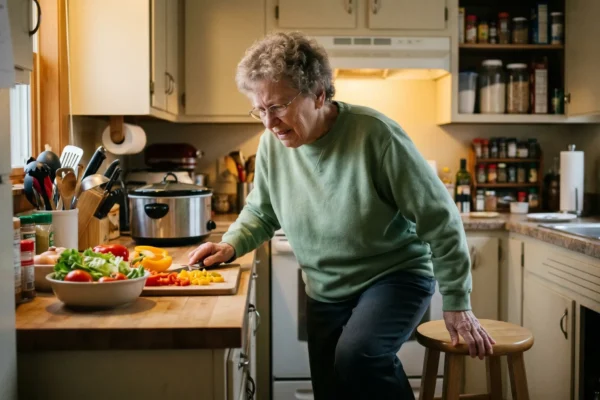
Physiological data suggests that after age 60, muscle mass decreases by approximately 3% annually in many adults. This loss is often accelerated by sedentary lifestyles or nutritional gaps. Without sufficient muscle density, the skeletal system loses its primary defense against gravity, making even standing up from a chair a high-energy, high-risk task.
The Role of Proprioception in Balance
Neural pathways that once allowed for lightning-fast corrections during a slip begin to slow down. For a senior living alone in Agoura Hills, this means that a loose rug or a slightly damp kitchen floor is no longer a minor annoyance but a significant medical threat. Improving lighting and removing clutter are temporary fixes, but they do not solve the underlying neurological decline.
5 Critical Signs It Is Time to Search for an Assisted Living Facility
The following signs indicate that the physical demands of independent living have surpassed the senior’s current capabilities. If you notice these shifts, searching for an assisted living facility near me becomes a necessary step for safety.
1. Significant Instability and Chronic Ankle Weakness
A specialized evaluation by a professional like Arkady Kaplansky, DPM can determine if these issues are due to mechanical failure in the ankle or foot. Proactive podiatric care is a cornerstone of fall prevention, as it addresses the foundation of the gait. When structural interventions like bracing or orthotics are no longer enough to ensure a stable step, a more supportive living environment is often required.
2. Failure to Manage Activities of Daily Living (ADLs)
Common Behavioral Indicators of ADL Failure:
- Difficulty standing long enough to prepare a basic, nutritious meal.
- Skipping showers because of the fear of slipping on wet tile.
- Neglecting laundry or household cleaning due to the inability to carry heavy loads.
- Wearing the same clothing for several days to avoid the effort of dressing.
3. Frequent Near-Misses or Reported Falls
The Statistical Reality of Senior Falls:
- Total Annual Falls: Over 14 million reported cases among U.S. seniors.
- Emergency Interventions: 3 million older adults are treated in emergency departments for fall injuries each year.
- Severe Outcomes: More than 800,000 hospitalizations annually, often for hip fractures or head trauma.
- Fatalities: Falls are the most common cause of injury-related death for those 65 and older.
4. Increasing Difficulty with Mobility Equipment
To ensure safety, it is vital to source high-quality, ergonomically correct aids from a reputable provider like Medlife Medical Supply, Inc. Properly fitted rollators and support frames are essential for maintaining what remains of the senior’s independence. However, if the senior still struggles to move safely even with the best equipment, it indicates that the home itself is the primary barrier to their safety.
5. Social Isolation and Cognitive Decline
How to Evaluate the Safety of the Current Home?
If the home requires significant structural changes that are not feasible, then A Better Solution In Home Care may recommend looking into a facility where these safety features are already built into the architecture. A professional assessment can help clarify whether the current environment is a help or a hindrance to the senior’s health.
Home Safety Comparison Table
| Feature | Standard Residential Home | Assisted Living Facility |
| Floor Surface | Often features rugs and high-pile carpet | Uniform, non-slip, and low-friction flooring |
| Lighting | Standard lamps with visible cords | Integrated, motion-sensor night lighting |
| Entryways | Typically has steps or high thresholds | 100% zero-threshold entry for all rooms |
| Bathroom Safety | Requires add-on bars and chairs | Built-in roll-in showers and reinforced bars |
| Emergency Access | Depends on phone or wearable tech | 24/7 integrated emergency call systems |
Critical Home Modifications List
- Removal of all area rugs and decorative floor items.
- Installation of high-intensity LED lighting in all transition zones.
- Attachment of double-sided railings on all staircases.
- Widening of doorways to at least 32-36 inches for walker clearance.
- Placement of non-slip mats in all wet areas.
Essential Aging in Place Guidelines
How Can Medical Technology Smooth the Transition?
To alleviate this burden, services like Doctor2me allow for professional medical evaluations to take place directly in the senior’s new residence. This on-site care ensures that the senior’s medical needs are met without the physical strain of transport. Having a physician visit the home or facility provides a level of continuity and safety that is essential during the first few months of relocation.
The Importance of Collaborative Planning
Psychological Support During Relocation
Conclusion: Taking the First Step Toward Safety
If you are noticing the signs of functional decline, do not wait for a medical crisis to act. Start the conversation about assisted living today, focusing on the freedom that comes with a safe, accessible, and supportive environment. Proactive planning is the most effective tool for ensuring that the golden years are spent in comfort rather than in recovery from a preventable accident.
Frequently Asked Questions
What are the first signs that a senior needs help with mobility?
Initial indicators often include “wall surfing” for balance and difficulty standing up from low chairs or sofas. You may also notice a neglect of grooming habits or a growing fear of using stairs, which suggests that basic senior care in home may no longer be sufficient to ensure their safety.
How do I decide between in-home care and assisted living?
If your loved one primarily needs help with household chores or transportation, home care services for elderly residents can be an excellent bridge. However, if they struggle with multiple activities of daily living (ADLs) or have a high risk of falling, an assisted living facility near me offers a safer, professionally engineered environment with 24/7 oversight.
What are the most common fall risk factors for seniors living alone?
The primary risks include age-related muscle loss (sarcopenia), poor home lighting, and untreated gait instability. When elderly in home assistance cannot effectively eliminate these environmental hazards or manage chronic instability, the statistical probability of a serious injury like a hip fracture increases significantly.
Can home modifications prevent the need for assisted living?
Structural changes like installing grab bars and zero-threshold showers can certainly extend the time a senior stays at home. However, if the individual is experiencing rapid functional decline or cognitive gaps that lead to medication mismanagement, these physical modifications cannot replace the expert seniors care provided in a residential setting.
Why is social isolation considered a symptom of mobility decline?
When physical limitations make it difficult to navigate the hills of Conejo Valley, many seniors stop leaving their homes entirely. This “shrinking world” effect is clinically linked to accelerated depression and cognitive decline, making the communal atmosphere of live in home care services or assisted living vital for mental health.
How can I evaluate if my parent’s current home is still safe?
Perform a safety audit to check for narrow doorways that obstruct walkers and high-pile carpeting that causes trips. If your loved one requires constant in-home elderly help to perform basic movements between the bedroom and bathroom, it is a clear sign that their current residential layout is no longer sustainable.