This content is for informational purposes only and does not substitute professional medical advice. Always consult a physician for diagnosis and treatment.
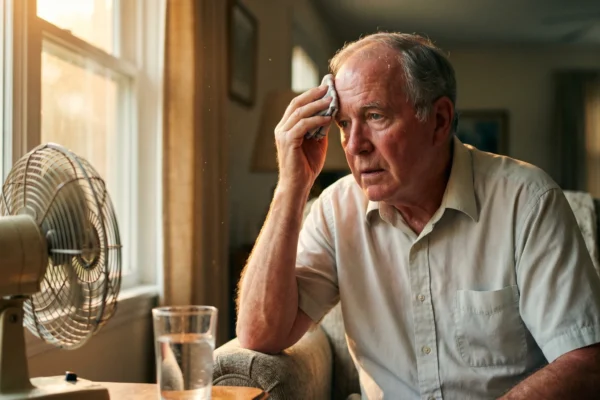
US summers can be exceptionally punishing for older adults. The primary danger lies in the body’s hidden, aging response to heat. Subtle signs of heat exhaustion are frequently missed or minimized. Monitoring seniors closely is essential before a mild issue becomes a life-threatening heat stroke. Recognizing distress early can save a vulnerable life.
Why Is Hot Weather So Dangerous for Seniors?
Many seniors also lose their natural daily thirst. They might not drink enough water on hot days. Dehydration makes heat exhaustion much more likely to happen. Blood flow to the skin drops heavily during dehydration. These traps heat deep inside the human body securely.
Here are the main biological changes affecting older adults:
- Decreased blood circulation to the skin surface.
- Fewer active sweat glands across the entire body.
- Reduced skin sensitivity to high ambient temperatures.
- A fading natural sense of daily human thirst.
- Lower total water volume stored inside the body.
What Is Heat Exhaustion and How Does It Start?
Catching a Sign of Heat Exhaustion Early
- Move the person to a cool, shaded room.
- Loosen any tight or restrictive clothing very quickly.
- Give them cool water to sip very slowly.
- Place damp cloths on their neck and wrists.
- Elevate their feet slightly to improve blood flow.
What Are the True Signs of a Heat Stroke?
Spotting the Signs of a Heat Stroke Fast
- Extreme mental confusion or sudden daily memory loss.
- Highly agitated or angry physical behavior without reason.
- Slurred speech that mimics a sudden brain stroke.
- A staggering walk or complete loss of balance.
- A sudden deep coma or violent physical seizures.
What Is Heat Rash and How Can You Treat It?
Simple Ways to Treat Heat Rash Skin
| Action Type | What You Should Do | What You Must Avoid |
| Clothing | Wear loose, light cotton shirts | Do not wear tight synthetic fabrics |
| Environment | Stay inside air-conditioned rooms | Avoid hot, heavily humid outdoor areas |
| Skin Care | Use cool, wet skin compresses | Do not use thick, heavy skin lotions |
| Drying | Pat the skin completely dry | Do not leave the sensitive skin wet |
How Can You Compare Heat Illnesses with Clear Facts?
| Symptom Marker | Heat Exhaustion Facts | Heat Stroke Facts |
| Skin Feeling | Cool, pale, and clammy skin | Hot, red, and completely dry skin |
| Sweat Level | Heavy, constant skin sweating | No sweating on the skin at all |
| Pulse Rate | Fast and very weak pulse | Rapid and very strong bounding pulse |
| Mental State | Mild dizziness or simple fatigue | Severe confusion or totally passing out |
| Body Fever | Temperature stays under 103 degrees | Temperature spikes over 104 degrees fast |
Keep this chart handy during hot summer months. Always err on the side of extreme medical caution. If you are unsure, call for professional help immediately. Do not guess when an older life is at risk.
What Are Good Daily Hydration Habits for Summer Safety?
Tracking Daily Water Intake for Seniors
| Beverage Type | Hydration Quality Level | Daily Recommendation for Seniors |
| Plain Water | Excellent | Drink one full glass every hour |
| Fruit Juice | Moderate | Limit to one small glass daily |
| Sports Drinks | Good (replaces lost salts) | Drink only if sweating very heavily |
| Sweet Soda | Very Poor | Avoid completely in the hot summer |
| Alcohol | Highly Dangerous | Avoid entirely during severe summer heatwaves |
How to Manage Indoor Temperatures Easily
Using Fans and Air Conditioning Properly
- Set the air conditioner to 81 degrees Fahrenheit.
- Change the AC filters every single calendar month.
- Keep indoor doors closed to trap cold air.
- Use ceiling fans to push cold air downwards.
- Avoid using the hot oven during the afternoon.
Why Does Humidity Increase the Daily Danger?
This traps intense heat deep inside the older body. A warm day feels much hotter with high humidity. The risk of heat stroke jumps very significantly. You must check the local heat index every day. The index combines temperature and local outdoor humidity levels.
| Relative Humidity | 80 Degrees Feels Like | 90 Degrees Feels Like | 100 Degrees Feels Like |
| 40% Humidity | 80 Degrees Fahrenheit | 91 Degrees Fahrenheit | 109 Degrees Fahrenheit |
| 60% Humidity | 82 Degrees Fahrenheit | 100 Degrees Fahrenheit | 129 Degrees Fahrenheit |
| 80% Humidity | 84 Degrees Fahrenheit | 113 Degrees Fahrenheit | Extreme Medical Danger |
| 100% Humidity | 87 Degrees Fahrenheit | Extreme Medical Danger | Extreme Medical Danger |
If the heat index is high, stay strictly inside. Dehumidifiers can help make indoor air much better. They pull extra moisture out of the closed room. This makes your air conditioner work much more efficiently.
How Do You Plan Safe Outdoor Summer Activities?
The sun is strongest between 10 AM and 4 PM. Older adults must stay indoors during these dangerous hours. The risk of heat stroke is simply immense then. If they go out later, wait until the sunset. The evening breeze helps keep the body very cool.Safe outdoor guidelines for older adults include:
- Always wear a wide-brimmed hat for deep shade.
- Apply strong sunscreen thirty minutes before going outside.
- Carry a full water bottle everywhere you ever go.
- Take long breaks in the shade every twenty minutes.
- Walk slowly and avoid any heavy physical yard work.
What Is Safe Medical Care During a Heatwave?
Using Doctor2me for Safe Home Care
Doctor2me removes the physical stress of daily medical traveling. It lowers the risk of catching other summer viruses. You can schedule an on demand house call easily. This keeps the seniors comfortable in their own environment. It is a smart choice for safe summer health.
Benefits of using a house call medical service:
- No driving in dangerously hot summer weather conditions.
- No sitting in crowded, stressful medical clinic rooms.
- The patient stays in a cool, very familiar environment.
- Medical care arrives directly at the senior patient’s door.
What Are the Final Steps for Summer Safety?
Daily Safety Checklist for Seniors
- Drink one full glass of plain water every hour.
- Stay indoors strictly between 10 AM and 4 PM.
- Wear loose, light-colored breathable cotton summer clothing daily.
- Keep the air conditioning running on hot summer days.
- Check on elderly neighbors twice a day very safely.
Hot weather is a threat, but it is manageable. Stay alert and watch for the early warning signs. Respond quickly if you see heavy, fast skin sweating. Never hesitate to call for rapid medical emergency help. Keep your home cool, safe, and fully hydrated today. Be proactive and keep everyone safe this entire year.
Frequently Asked Questions
What is the most common sign of heat exhaustion in seniors?
Heavy sweating combined with cold, clammy skin is an early warning sign. Muscle cramps and a fast, weak pulse usually follow quickly. You must cool the older person down immediately to prevent severe danger.
Can an older adult have a heat stroke without sweating?
Yes, a complete lack of sweat is a primary medical warning. During a heat stroke, the body loses all temperature control rapidly. The skin will feel extremely hot, red, and completely dry instead.
How quickly does extreme summer heat cause a heat stroke?
Dangerous internal body temperatures can peak within ten to fifteen minutes. This rapid heating causes severe mental confusion and sudden fainting spells. Always treat this sudden spike as a massive, life-threatening medical emergency.
What should you do while waiting for emergency medical help?
Move the senior patient into a shaded or air-conditioned room instantly. Apply cold ice packs to their neck to lower core body heat. Never force a highly confused person to drink plain water.
How can older people prevent severe heat rash during summer?
Keep vulnerable skin folds completely dry and very cool every day. Dress in loose, light-colored cotton clothing to prevent trapped skin sweat. Use cold, wet compresses to soothe the intensely itchy skin rash.