This content is for informational purposes only and does not substitute professional medical advice. Always consult a physician for diagnosis and treatment.
To prepare for the 2026 Westlake Village wildfire season, seniors must set up a clean indoor room, build a solid backup of medical supplies, and plan a safe escape route right now. Westlake Village is a beautiful place to live, but the nearby dry brush brings a serious risk. Experts say 2026 will be very dry with strong, hot Santa Ana winds. These specific winds make fires spread very fast across the hills.
This means older adults need to get ready today. Wildfires bring extreme heat and fill the air with dangerous, heavy smoke. This smoke can badly hurt your lungs and your heart. This guide will show you exactly how to protect your air, handle your health needs, and plan a safe exit.
How Does Poor Wildfire Smoke Air Quality Harm Your Body?
Because they are so small, your body cannot block them naturally. When you breathe, they travel deep into your lungs and slip right into your blood. For young people, this might just cause a sore throat or watery eyes. But for older adults with health problems, the smoke causes painful swelling inside the body.
This sudden swelling puts a lot of stress on your heart and your lungs. A simple smoky day can quickly turn into a serious medical emergency. You must take this invisible threat very seriously. Smoke also makes it very hard to sleep at night, and without sleep, your body cannot heal. Protecting your air is the only way to get the rest your body truly needs during a crisis.
Protecting Your Lungs: Chronic Obstructive Pulmonary Disease and Asthma
It also makes your airways shrink even more, which stops fresh oxygen from getting to your body. The Mayo Clinic notes that you must avoid smoke completely if you have this condition. You also need to follow your daily health routines exactly as told. This is especially true if you have asthma.
Asthma makes the small tubes in your lungs twitch and close up tightly when you breathe bad air. Make sure you have extra breathing tools at home and keep them close by on your table. During a fire, local stores might lose power, and you do not want to run out of what you need to breathe easily. Breathing is something we usually do without thinking, but during a fire, every breath takes extra work. By staying inside and resting, you give your lungs a much-needed break.
Spotting Symptoms of Heart Disease and Shortness Breathing
Seniors with heart problems need to be very alert during fire season. You should learn to spot the symptoms of heart disease early. The Mayo Clinic lists important warning signs, like a heavy feeling in your chest or pain in your left arm. Sudden dizzy spells are also a big warning sign that something is wrong.
It is important to know the difference between normal tiredness and a true emergency.
| Warning Sign | What It Might Mean | What You Should Do |
| Shortness breathing when resting | Severe lung stress | Sit down, stay calm, and use your breathing tools. |
| Heavy pressure or pain in the chest | Possible heart emergency | Call 911 right away. |
| Sudden dizzy spells or feeling faint | Poor oxygen in your blood | Sit or lie down and get medical help. |
Many older adults feel very tired on smoky days. You might feel sudden trouble breathing when you just walk across the room. When this happens, your heart has to work much too hard to pump blood. If you have trouble breathing, do not wait for the air to clear – call emergency services right away.
How Do You Make Your Home a Safe, Clean Room?
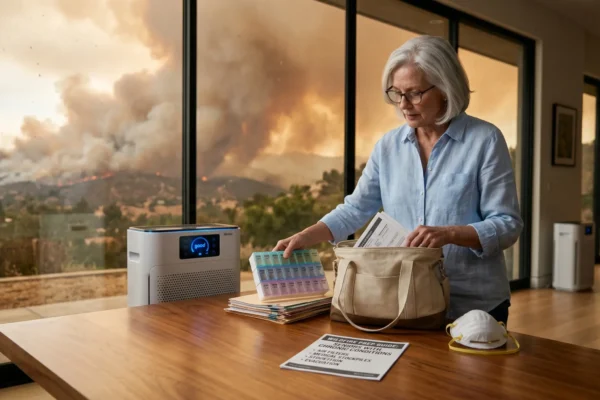
Make sure the room does not have a fireplace. Next, you need to firmly seal the room by closing all windows and doors tightly. Use damp towels to block the open cracks under the doors. You can also use special tape around the window frames to block drafts.
Turn off any fans that pull air in from the outside. You also need to constantly clean the air inside this room. Regular paper filters in your air conditioner will not work well enough. You need special tools to trap the tiny smoke bits.
| Tool to Clean Air | How Well It Works | Best Way to Use It |
| HEPA Air Purifier | Traps 99.97% of tiny particles | Run it all day and night in your clean room. |
| MERV 13 Filter | Very good at catching smoke | Put it in your home air system and run the fan. |
| Box Fan with Filter | Good backup choice | Tape a thick filter to the back of a regular box fan. |
You should also avoid doing things that make the air dirtier inside your home. Keeping the air clean means changing your daily habits for a little while.
- Do not burn candles or use your gas stove while the smoke is bad outside.
- Do not vacuum the floors, because this just pushes old dust back into the air.
- Do not spray room fresheners, as they add harsh chemicals to the air you breathe.
Keep your clean room as quiet and dust-free as possible.
Picking the Right Wildfire Smoke Respirator
The Centers for Disease Control and Prevention says you should use an N95 or P100 mask. These special masks fit very tightly to your face. They force all the air you breathe to go through a thick filter.
You should practice wearing these masks before the fires actually start. Pinch the metal piece so it fits snugly over your nose. Make sure there are no gaps near your cheeks or chin, because leaking air will hurt your lungs
How Can You Gather Supplies and Get Care at Home?
Because of this, you need a solid backup plan for your daily health needs.
- Keep a full 30-day backup of your important daily pills and breathing tools.
- Buy extra batteries for hearing aids and blood pressure monitors.
- Secure a backup power source like a generator if you use an oxygen machine.
The power company might turn off the electricity on purpose to stop broken wires from starting fires. You must have a way to keep your oxygen running smoothly.
Getting help from a clinic is hard during an active fire. Driving means breathing bad air in your car, and clinics are full of sick people. If you need a routine visit, consider using a service like Doctor2me. A licensed professional can come right to your living room.
It is also important to know where to turn if you suffer a serious skin injury from the fire itself. For severe burns or slow-healing wounds, a specialized provider like GotWound can offer necessary care, including advanced grafting services, to help your skin heal properly. They can often use telehealth to assess your needs via your phone or tablet first, helping you get expert advice from the safety of your clean house. Remember to keep your supplies in a spot where you can easily reach them if the lights go out.
How Do You Plan a Safe Escape Route?
Your emergency bag should include these important items:
- Printed copies of your doctor records and a clear list of your health needs.
- Extra eyeglasses and a fresh set of hearing aid batteries.
- Clean drinking water in sealed plastic bottles.
- A small, battery-powered radio so you can hear the local news.
You also need to plan two different ways to drive out of your neighborhood. The main road might be blocked by large fire trucks. Practice your escape plan with a friend so you know exactly where to turn. Driving a new route during the day is much easier than driving it at night.If you cannot drive safely, you must plan ahead. A private service like “MediZoom Transportation, LLC” provides safe rides for seniors who need to leave the area quickly. Knowing you have a ride will help you stay calm when the smoke makes it hard to see
What Happens After You Leave Home?
They are not a good place for older folks who are sick or weak. If you cannot go home for a while, you have other choices. A group called Senior Home Transitional Services helps families find safe, quiet places to stay.
These places have the right tools to keep you healthy. They will make sure you are well cared for until it is safe to go home. Take these easy steps today to keep yourself healthy, safe, and breathing easy all season long.
Frequently Asked Questions
How does wildfire smoke affect seniors with COPD or asthma?
Wildfire smoke contains microscopic PM2.5 particles that easily bypass the body’s natural defenses and cause severe airway inflammation. For seniors managing chronic obstructive pulmonary disease or asthma, this toxic exposure rapidly triggers excess mucus production and dangerous breathing difficulties.
What is the best way to clean indoor air during a fire season?
The most effective method is creating a designated clean room equipped with a high-efficiency HEPA air purifier running continuously. You should also keep all windows tightly sealed and ensure your home air system is set to recirculate indoor air through a thick MERV 13 filter.
Can a regular cloth mask protect my lungs from wildfire ash?
No, standard cloth masks and standard paper face coverings cannot block microscopic smoke pollutants. To properly protect your respiratory health when you must go outside, you need to wear a tightly fitted, NIOSH-approved N95 or P100 wildfire smoke respirator.
What essential medical supplies should older adults pack for an emergency evacuation?
Seniors must pack a dedicated emergency bag containing a full 30-day backup of all daily pills and necessary breathing tools. It is also critical to pack printed medical records, spare eyeglasses, and backup power sources for any required oxygen machines.
Can breathing heavy smoke trigger symptoms of heart disease?
Yes, inhaling fine particulate matter causes sudden swelling inside your body that can constrict blood vessels and raise blood pressure. This severe environmental stress forces the heart muscle to work much harder, which can quickly lead to chest pain, shortness breathing, or sudden dizzy spells.