This content is for informational purposes only and does not substitute professional medical advice. Always consult a physician for diagnosis and treatment.
A cataract is a cloudy area inside your eye lens. It causes your vision to become very foggy and dark. Fortunately, a simple 15-minute surgery can replace the cloudy lens and completely restore your sight.
The numbers surrounding this condition are staggering. Over 20 million Americans over age 40 currently have a cloudy lens. Research from the Prevent Blindness study, “The Future of Vision,” estimates that number will increase to 45.6 million by the year 2050. Vision loss is a massive issue across the country.
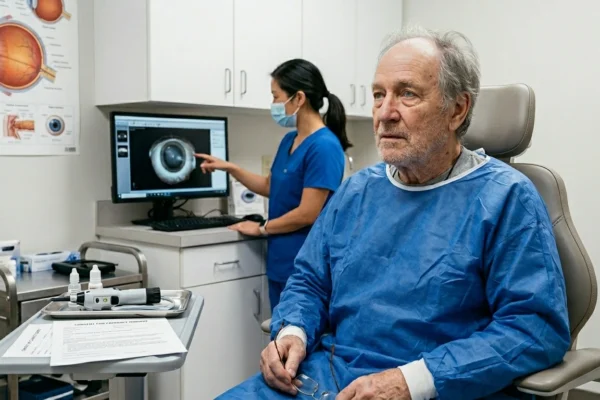
Why Does Your Eye Get Blurry Over Time?
The picture lands on the retina at the back of your eye. The retina acts like the film in a camera. It sends the final image directly to your brain. When you are young, your lens is perfectly clear.
The Science Behind Lens Clouding
As you celebrate more birthdays, these proteins begin to break down. They lose their precise shape and start to clump together. These tight clumps create a thick physical block inside your eye.
The physical block scatters incoming light rays in the wrong directions. Your retina receives a very distorted and blurry picture. This protein buildup is a natural part of growing older. It happens to almost everyone eventually.
Recognizing the Early Symptoms of Cataracts in Your Eyes
Eventually, the symptoms of cataracts in your eyes become impossible to ignore. You must learn to recognize the early warning signs. Catching the problem early protects you from dangerous accidents.
Here are the most common early warning signs:
- Your daily vision seems foggy or covered in a film.
- You need significantly brighter light to read a book.
- You see large rings or halos around streetlights at night.
- Your world looks dim and colors appear washed out.
- You experience double vision in one specific eye.
What Are the Main Types of Lens Clouding?
Doctors classify this condition into three main categories. Each category progresses at a completely different speed. Understanding your specific type helps you plan for the future.
| Type of Clouding | Starting Location | How It Changes Your Vision |
| Nuclear | The exact center of the lens | Colors slowly turn a dark shade of brown. |
| Cortical | The outside edges of the lens | White streaks slowly grow toward the middle. |
| Posterior Subcapsular | The back surface of the lens | Grows very rapidly and causes severe night glare. |
What Causes Your Eyes to Cloud So Quickly?
The sun is a massive danger to your eye health. Ultraviolet light from the sun causes severe cellular stress. This daily stress destroys the healthy proteins inside your lens.
The Hidden Dangers of Sugar and Health Conditions
People with diabetes often develop eye problems much earlier in life. They face a significantly higher risk of permanent blindness. Controlling your daily blood sugar is vital for protecting your sight.
How Sleep and Radiation Affect Your Vision
Radiation is another proven danger to your eye lens. Even small amounts of medical radiation can damage the proteins. X-ray technicians must always wear proper protective gear at work.
When Is It Time to Consider Cataract Eye Surgery?
That advice is completely outdated and actually very dangerous today. Modern medical experts strongly disagree with that old approach. You should never wait for your vision to fail completely.
The Danger of Ignoring Blurry Vision
Excess heat can damage the delicate cells surrounding your lens. This damage leads to a much longer and harder recovery process. It also increases the overall risk of surgical complications.
The Real Cost of Waiting Too Long
If your optic nerve dies from high pressure, the blindness is permanent. Surgery cannot fix a dead optic nerve. You must take action before your eye blurry sensation causes permanent harm.
You should consider the procedure when your life changes. Ask yourself if you can still drive safely at night. Ask yourself if you can read the newspaper without a struggle. If your vision stops you from living freely, it is time.
How Can You Prepare Your Home for Recovery?
Clear your floors of any unnecessary clutter and loose cables. Remove small rugs that could easily cause a dangerous fall. Make sure your hallways have bright and clear lighting.
- Prepare several easy meals in advance and freeze them.
- Stock your kitchen with healthy and simple food options.
- Place your daily items on low counters to avoid stretching.
- Ask a trusted friend to drive you home from the clinic.
The Role of Nutrition in Eye Health
You need to consume plenty of powerful antioxidants. These special nutrients fight the hidden damage from the sun. Eat large amounts of dark greens like spinach and kale.
Building a Diet for Clear Sight
You should strictly avoid sugary snacks and highly processed foods. High sugar levels cause dangerous swelling inside your eye. Drink plenty of fresh water to keep your body fully hydrated.
Modern Eye Surgery: What Are Your Options?
The surgeon uses special drops to completely numb your eye. You will not feel any pain during the fast process. You might just feel very light pressure or see bright colors.
Advanced Techniques in Cataracts Surgery
Surgeons use two primary techniques to perform this delicate work. Both techniques provide excellent and highly clear vision results. Your doctor will recommend the proper path for your specific eyes.
| Surgical Technique | How It Actually Works | Important Patient Benefits |
| Standard Ultrasound | High-frequency sound waves break the lens apart. | Extremely fast and highly effective for most people. |
| Laser-Assisted | A cool laser precisely softens the hard lens first. | Uses less total energy and protects delicate eye tissue. |
Choosing the Perfect Lens for Your Eyes
The new lens will completely fix your cloudy vision problem. It can also fix your lifetime need for thick glasses. This is a life-changing benefit for many older adults.
Here are the most common artificial lens options:
- Standard Monofocal: Provides clear vision for one single distance. You will still need standard glasses for reading close text.
- Toric Design: Specifically fixes an uneven eye shape called astigmatism. It provides much sharper focus for patients with irregular eyes.
- Extended Focus: Creates a continuous range of clear vision. You can easily see far away and see your computer screen.
- Light Adjustable: The doctor implants this special lens first. Later, they shine a light on it to change its shape.
What to Expect During Recovery from Cataract Surgery
Your eye is very delicate right after the fast procedure. You must follow every single rule your doctor gives you. Your final vision success depends entirely on your daily habits.
A Detailed Timeline for Healing
| Healing Phase | What You Might Feel | Strict Rules to Follow |
| First 48 Hours | Mild scratchy feeling and high light sensitivity. | Never rub the eye. Wear your clear plastic shield. |
| 1 Week | Vision clears up fast. Colors seem extremely bright. | No lifting heavy items. No bending over at the waist. |
| 2 to 3 Weeks | The eye feels normal. Your vision fully stabilizes. | Light walking is fine. Keep all water out of the eye. |
| 4 to 8 Weeks | Internal healing is finished. Your brain adapts perfectly. | Resume all normal life activities. Get a final checkup. |
Strict Rules for the First 48 Hours
These drops prevent dangerous swelling and block harmful infections. If you ever feel sudden or sharp pain, call your doctor. These are rare but highly serious warning signs of a problem.
How to Find a Good Surgeon for Cataracts Surgery Near Me
However, you must do your homework before choosing a doctor. Look for a surgeon with a completely clean safety record. Ask them how many eye procedures they perform each month.
Questions to Ask Your Surgeon
Write down your specific questions before your clinic appointment. Bring a family member to take careful notes for you. Ask the doctor about their exact complication rate.
You must also deeply discuss your lens choices. Ask which specific lens fits your daily lifestyle needs. Knowing the actual facts gives you incredible peace of mind.
How Can You Protect Your Precious Sight After Surgery?
You must actively protect this amazing gift of sight. The surgery fixed your lens, but your retina still needs protection. Ultraviolet light can still damage the back of your eye.
Life After a Successful Procedure
Write down your specific questions before your clinic appointment. Bring a family member to take careful notes for you. Ask the doctor about their exact complication rate.
You must also deeply discuss your lens choices. Ask which specific lens fits your daily lifestyle needs. Knowing the actual facts gives you incredible peace of mind.
Frequently Asked Questions
How long does it take to fully recover from cataract surgery?
Most patients notice significantly clearer vision within the first few days, though complete internal healing takes about four to eight weeks. During this recovery from cataract surgery, you must use prescribed healing drops daily and protect your delicate eye from dirt and bright light.
Is cataract eye surgery a painful procedure?
No, the lens removal process is practically painless because your surgeon applies special numbing eye drops before beginning. You will remain safely awake and relaxed, usually only feeling a very mild pressure sensation during the quick 15-minute procedure.
Can the cloudy lens ever grow back after my operation?
A cataract can never grow back because your natural clouded lens is permanently removed and replaced with a clear artificial lens. Occasionally, a thin tissue membrane behind the new lens may become foggy months or years later, but this is easily cleared up with a simple, painless laser treatment.
What happens if I ignore my blurry eye sensation and wait?
Delaying medical care allows the cloudy protein clumps to harden completely, which makes the eventual surgical removal much more difficult and increases your recovery time. Ignoring the early symptoms of cataracts in your eyes can also lead to dangerous internal eye pressure and permanent damage to your optic nerve.
Will I still need to wear reading glasses after getting my new lenses?
Your daily need for glasses depends completely on the specific type of artificial lens you select with your doctor. Standard monofocal lenses usually still require you to use reading glasses for close-up tasks, while advanced premium lenses can provide sharp focus across multiple distances.