This content is for informational purposes only and does not substitute professional medical advice. Always consult a physician for diagnosis and treatment.
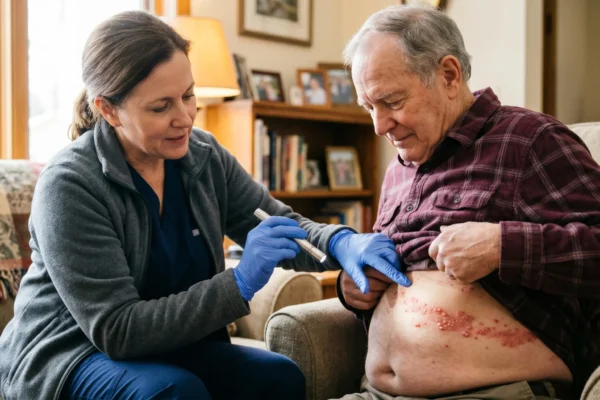
Shingles is a painful rash caused by the same virus that gives children chickenpox. After you recover from chickenpox, the virus stays quiet in your body for years. Later in life it can wake up and cause shingles, also called herpes zoster. The risk goes up as you get older, which is why shingles and the shingles vaccine matter so much for adults over 50.
If you think you have shingles, do not wait. Getting seen quickly can ease the pain and lower the chance of lasting problems. A trip to a busy clinic is not always easy, so with Doctor2me you can choose a doctor and have them visit your home, often the same day, with no waiting room and less risk of picking up another illness.
What Is Shingles?
The Chickenpox Connection
What the Rash Looks Like
Shingles Symptoms in Older Adults
Early Warning Signs
Postherpetic Neuralgia
Shingles Near the Eye
The Shingles Vaccine: Shingrix
What Is the Zoster Vaccine?
Shingles Vaccine Age: Who Should Get It
The two doses are given two to six months apart for most people. For adults with weak immune systems, a doctor may space the second dose just one to two months after the first. A doctor can help you pick the right timing for your health.
How Well It Works
Side Effects of the Zoster Vaccine
The side effects of zoster vaccine shots are usually short and mild. Common ones include:
- A sore, red, or swollen arm where you got the shot
- Tiredness or muscle aches
- Headache
- Fever, chills, or an upset stomach
These reactions can be strong enough that some people feel run down for a day, so it can help to get the shot when you have a light schedule. Serious reactions are rare. If you have ever had a severe allergic reaction to a vaccine, tell your doctor before getting Shingrix. For most older adults, a day or two of a sore arm is a small price to pay for strong protection against a painful illness.
What Raises Your Risk of Shingles?
Age and a Weaker Immune System
Stress and Other Triggers
When to See a Doctor
Because shingles can make you feel too sore and tired to travel, a home visit is often the easiest path. With Doctor2me, you can have a doctor come to you to confirm shingles, start treatment, and talk through whether the vaccine Shingrix is a good next step once you heal. It is private, same-day care without a single line.
If you have any questions about timing or whether you are a good fit, Mayo Clinic’s guidance on the shingles vaccine is a helpful starting point, and your doctor can tailor the advice to you.
Frequently Asked Questions
At what age should you get the shingles vaccine?
The shingles vaccine age for healthy adults is 50 and older. Adults 19 and older with weak immune systems should get it too. The age for shingles vaccine is the same whether or not you have had shingles before.
When should you get the shingles vaccine if you already had shingles?
You should still get the vaccine Shingrix, because shingles can come back. Doctors usually suggest waiting until the rash is gone and you feel better. Ask your doctor about the best timing for you.
How many doses of the zoster vaccine do you need?
Shingrix is a two-dose vaccine. The shots are given two to six months apart for most people. People with weak immune systems may get the second dose one to two months after the first.
What are the side effects of the zoster vaccine?
Common side effects of the zoster vaccine include a sore arm, tiredness, muscle aches, headache, fever, and chills. They are usually mild and fade in a day or two. Serious reactions are rare.
Do you need the shingles vaccine if you had the chickenpox vaccine?
Most adults who got the chickenpox vaccine as children are now too young to need the shingles shot. Shingles immunizations are still advised at age 50 and older, since the virus can reactivate later in life.
How effective is the shingles vaccine?
Shingrix is more than 90% effective at preventing shingles in healthy adults 50 and older. It is about 97% effective for ages 50 to 69 and about 91% effective for people 70 and older.