This content is for informational purposes only and does not substitute professional medical advice. Always consult a physician for diagnosis and treatment.
Pneumonia is a lung infection that can be far more dangerous for older adults than for younger people. As we age, the immune system weakens and the lungs do not clear germs as well, so a simple cough can turn serious fast. The good news is that pneumonia is often preventable. Vaccines, good hygiene, and quick care at the first warning signs can keep most seniors safe.
If an older parent has a cough, fever, or trouble breathing and you cannot get to a clinic quickly, you can choose a doctor and request a same-day home visit through the Doctor2me network. A home visit means a senior is seen right away, in comfort, and away from a crowded waiting room where other germs spread.
What Pneumonia Means
Community-Acquired Pneumonia
Why Pneumonia Is So Dangerous for Seniors
Types of Pneumonia Older Adults Should Know
Walking Pneumonia
Aspiration Pneumonia
Symptoms of Pneumonia in Seniors
Common Warning Signs
Quiet Signs That Are Easy to Miss
Is Bacterial Pneumonia Contagious?
How Pneumonia Is Diagnosed
For a senior who is too sick or frail to travel, getting a chest X-ray used to mean a hard trip to a hospital. Mobile imaging services such as Gentry Imaging can bring X-ray and EKG right to the home, which makes it easier to confirm pneumonia and watch the lungs heal without a stressful trip out.
Pneumonia Treatment and Medication
Antibiotics and Home Care
Signs That Pneumonia Is Improving
Recovery and Care at Home
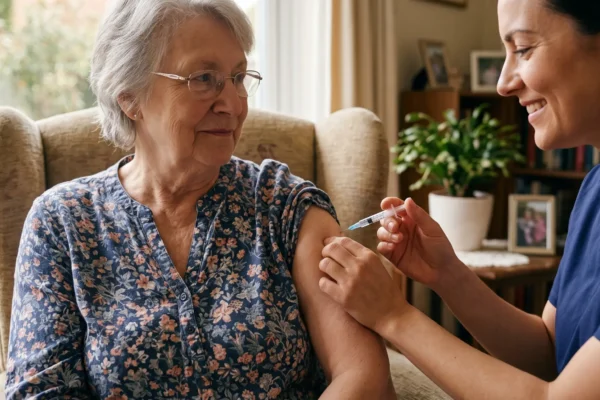
How Vaccines Help Prevent Pneumonia
Why the Vaccine Age Was Lowered to 50
Which Pneumonia Vaccines Seniors Need
Other Everyday Ways to Lower Your Risk
Frequently Asked Questions
Should people over 70 get a pneumonia shot?
Yes. The CDC recommends pneumococcal vaccination for all adults 50 and older, so anyone over 70 should make sure they are up to date. Older adults are at higher risk for serious pneumococcal disease, and the vaccine lowers the chance of severe pneumonia. Talk with a doctor about which shot is right for you.
Do seniors need a pneumonia shot booster?
The pneumococcal vaccine is usually not a yearly booster like the flu shot. Most adults need one PCV dose, and sometimes a second vaccine called PPSV23 afterward. Because the rules depend on age and past shots, a senior should ask a doctor to check their record and confirm if any more doses are needed.
What are pneumonia shots for seniors?
There are two kinds: pneumococcal conjugate vaccines (PCV15, PCV20, or PCV21) and a polysaccharide vaccine (PPSV23). For most adults 50 and older who never had one, the CDC recommends a single PCV dose, with PPSV23 to follow if PCV15 is used. A doctor will pick the best option based on your history.
How long does it take for the elderly to recover from pneumonia?
Most people start to feel better within about two weeks, but older adults often need longer, especially with other health problems. Full energy can take several more weeks. A follow-up chest X-ray may stay cloudy for a while even after you feel well, so recovery is judged mostly by how you feel and breathe.
How can you help an elderly person recover from pneumonia?
Make sure they take every dose of their medicine, even after they feel better, and help them rest and drink plenty of fluids. Watch for warning signs like worse breathing or a returning fever. In-home nursing or therapy can support recovery, and a home doctor visit can check progress without a tiring trip out.
How long does it take for a chest infection to heal?
A mild chest infection often improves within one to two weeks once treatment starts, while pneumonia can take longer in older adults. Symptoms like cough and tiredness may linger for several weeks as the lungs heal. If symptoms get worse after first improving, contact a doctor, since the infection may need a closer look.